Showing posts with label spirit. Show all posts

Friday, December 4, 2020

Pandemic postcard #37: 'We are still here'

Eight miles west of Highway 101, I had a decision to make: Continue straight to La Push on Washington 110 or turn right to Mora. I had a reservation at the Mora Campground near Rialto Beach, but check-in was many hours off, so I thought I'd spend the morning at Second Beach near La Push. As I neared the intersection, I saw the choice had been made for me: The temporary road sign flashed "QUILEUTE RESERVATION CLOSED."

Good for them, I thought.

As the pandemic took hold last spring, tribal governments up and down Washington's coast closed their lands to visitors. When summer came and the spread of the virus slowed, many adjacent areas in Olympic National Park opened to stir-crazy Americans seeking outdoor relief from isolation. I saw license plates from all over at Rialto Beach and cars parked a half-mile down Mora Road. But just across the Quileute River, its eponymous tribal nation remained off-limits to outsiders, as did the Makah reservation at the northwestern tip of the contiguous United States and the Quinault Indian Nation in southwestern Washington.

I applaud tribal nations for doing whatever they can to keep the coronavirus at bay, especially given the long history of indigenous people dying from diseases brought by outsiders and the high COVID-19 toll some Indian nations are facing in 2020. The closures are a reminder that the 574 tribal nations in the United States are sovereign and have the right to self-determination as well as the right to receive benefits from the federal government.

At least most of them do. Here in Seattle, we live on the unceded land of the Duwamish people. Our city was named for Duwamish Chief Si'ahl, who famously said, "The earth does not belong to man; man belongs to the earth. This we know: all things are connected like the blood which unites one family. All things are connected." 

The Duwamish are a federally recognized tribe under the 1855 Treaty of Point Elliott, but they are not currently on the list of federally acknowledged tribes. According to the Duwamish website, in 1978, the federal Bureau of Indian Affairs basically amended the treaty by adding seven new rules with which the Duwamish must comply to receive land, benefits, and services. The case has been under review by the Interior Department's Board of Indian Appeals for more than five years. 

Meanwhile, despite being in the heart of one of the wealthiest areas in the United States, many Duwamish people cannot access health services, nor can the tribe profit from tourism and gaming, as so many others do. (Seattle is surrounded by high-end resorts run by the Snoqualmie, Puyallup, Suquamish, and other neighboring tribes.) Even if the Duwamish prevail, I'm not sure how likely I'd be to hit a future casino. But along with more than 10,500 other people--half of whom have signed up in 2020--I've decided it's time to pay a small, symbolic amount of rent to the Duwamish people in recognition of the centuries they've spent caring for the land where I live today.

In last Sunday's online service, my minister Rev. Beth Chronister advocated for Real Rent Duwamish, and she also acknowledged that our physical building is on Duwamish land. I am part of a faith tradition that is grappling like never before with our nation's history of settler colonialism and enslavement. But Rev. Beth cautioned us against absolving ourselves with what theologian Dietrich Bonhoeffer called "cheap grace." We can pay token rent and say a land acknowledgment and call it good, or we can go deeper, into real relationship and covenant with each other. 

I can think of two ways beyond church that I will try to do this. Early in my freelance writing career, I authored two guidebooks that explored the Oregon Trail and the Lewis and Clark Trail. I know I tried my best--given my body of knowledge in the 1990s--to offer a nuanced view of how the United States expanded westward, yet I am sure I fell fall short. As I get future opportunities to write about history, I will do better.

Second, I recommit to living as lightly as I can. I retain a small footprint by American standards, dwelling in 400 square feet, yet like Henry David Thoreau, I need to leave my cabin now and then. I usually go on foot, but I have a car, and I occasionally use it to visit nature that's not within walking distance. A paradox, I know. So when I go into the woods and walk beside the waters, I want to be as mindful as I can of what I find there. "We rarely care for that we cannot name," says British writer Robert Macfarlane, who has worked with artist Jackie Morris and musicians to re-animate lost words from the natural world, just as many Americans seek to authentically connect with indigenous wisdom.  

This is not wisdom from the past. Its practitioners are here now, seeking the right to harvest salmon and protect their water from oil spills. As best I can as a 21st century urban creature of comfort, I want to know plants by their names and birds by their songs. I want to invoke spirits and spells and "sing the things I see," perhaps gaining a tiny fraction of the knowledge possessed by the people who have lived here for millennia and who still live here today. I honor their wisdom and would be grateful for a small measure of it, if I am worthy. Spirit of life, let me be worthy of these gifts, and let us share them widely.

_____

Thank you for reading Surely Joy. You can find the new version of the blog here.

Wednesday, November 25, 2020

Pandemic postcard #36: Thanks for the memories

This week's post comes a little early as we usher in this strange holiday season. I wish you all as happy a Thanksgiving as your current circumstances allow.

In 2010, I reflected on the most memorable Thanksgivings I'd had so far and was surprised to realize they'd all been in my 20s. What a difference 10 years makes. Today, I can easily remember how I spent  every single Thanksgiving from the past decade. This feels good at a time of life when my memory is supposed to be fading. 

It's 2011, the first of several in a string of Thanksgivings spent in San Francisco with my brother Jeff and his partner Kevin, both skilled and loving cooks. Such good food, such good company. On Friday, Jeff and Kevin treat Bruce and Natalie and me to a visit to the California Academy of Sciences. A butterfly briefly rests on Kevin's hand. He is the butterfly whisperer.

2012. I have lived in the Bay Area for seven months, decamping there from Idaho just after Dad died. The job I've moved here for is a disappointment, but I absolutely love California: the light, the people, the diversity. I am living a long-held dream of not needing to own a car, but I rent one to fetch Natalie at Humboldt State for her Thanksgiving break. We join Jeff and Kevin and Bruce for another memorable meal. 

Thanksgiving morning 2013. I am at the Oakland airport, nearly giddy with anticipation at seeing Tom for the first time in a few weeks. We share Thanksgiving with Jeff and Kevin and sleep at their place, since my Oakland apartment is packed up. The next morning, Tom and I pick up a small rental truck, meet a packing crew, and get on the road to Seattle, where I've rented an apartment to be closer to my love.

2014. It's just Tom and me this year. We take a morning train to Centralia, WA, and enjoy a leisurely midday dinner at McMenamins' Olympic Club, where the buffet is spread out over several pool tables. We retire to our room upstairs and take a long nap. It is a perfect day. 

Tom and I get two Thanksgivings in 2015. The first is in the Denver suburbs on Sunday, with Tom's brother Marty and his family and a bunch of people from the bar Marty owns. Tom plays his dad's old banjo. On Tuesday, Tom and I board Amtrak's California Zephyr at Denver's Union Station and ride over the Rockies for Thanksgiving #2, with Jeff and Kevin plus Natalie, who has flown down from Boise. 

Thanksgiving 2016 comes a few weeks after Tom's stem cell transplant, and it's just the two of us celebrating at Swedish Hospital. Considering that he had almost died from engraftment syndrome four days before the holiday, Tom is doing much better. I dial up Paul Simon ("These are the days of miracles and wonders ...") and Arlo Guthrie on Spotify, we eat the not-too-bad-for-hospital-food Thanksgiving dinner, and we are grateful. 

2017. I don't have specific memories of this holiday--my most recent one in San Francisco--apart from the warm embrace of family, of building a collaborative playlist, and of gathering around the table for another amazing meal. Of course, we watch Love Actually afterward. This will be Tom's last Thanksgiving. We don't know that yet, but after the wild ride of Thanksgiving Week 2016, I don't take anything for granted.  

2018. It's a weird year. Tom has been gone four four months. Kevin and Natalie both work in the plant-care field and Thanksgiving season means poinsettia distribution. We decide to make it easy on Natalie this year and meet at a rented Airbnb near Boise to mark an early Thanksgiving. I spend the actual holiday handing out food and socks at the Union Gospel Mission in downtown Seattle. 

2019. I have plans to see Natalie in Boise just before Christmas, my extended family in Chicago on December 24 and 25 (for the first time in decades), and Jeff and Kevin in San Francisco for New Year's, so I'm at loose ends on Thanksgiving Day. I consider a solo trip somewhere, but I stay home and make myself a simple dinner. I'm OK company, but I'm grateful that I'll be with family for Thanksgiving 2020. 

2020. Except I won't. And neither will most of you.  

Sigh. And yet, and yet. This past decade has shown me that a rich storehouse of memories and an attitude of gratitude can serve us well in times of loss. Meister Eckhart said, "If the only prayer you say in your life is thank you, that would suffice." And a day before he died, Tom mused to me, "Maybe just being grateful and happy is enough. So thank you." 

I'll leave it at that for now. I am grateful for shared Thanksgivings past, I look forward to making more memories in person with my beloveds in the 2020s, and I wish the same for us all. 

P.S. If you are new to Surely Joy, or even if you're not, you may want to revisit my post from this week in 2018, when I wrote, "This is a season of living while we wait to resume life." Those words, true for me in 2018, are true for us all this year. There will be better days--and yet these are the days we'll remember. 

____

If you enjoy Surely Joy, please consider supporting my work via Patreon, a website where you can help creators whose work you value. Sign up this week to help sustain my work in December and beyond. Pledges start at $3 a month. Thank you! 

Friday, November 13, 2020

Pandemic postcard #34: Life as one big art project


February:
 I did not see this coming. My daughter Natalie announces on social media that she has recorded an album, and I spend my next-to-next-to-last night in Guadalajara marveling at her nine-track Something to Harvest release on BandCamp. Performing as "Fine Hands," Natalie wrote all the songs, played all the instruments, overdubbed her vocals, even painted the cover art. One of my favorite lyrics becomes all too poignant within a few weeks: "I know you said handshakes give you anxiety. So give me your hand, I'll hold it still as can be."

March: It's a few weeks into the pandemic. "Give me something small to paint," Natalie writes on her Instagram story. "Self portrait but as a snail," writes one friend. "A lone backroad under the stars at night," suggests one, and another wants to see a cat playing drums. My request is for "the tiny sea creature of  your choice." Natalie paints and posts a series of watercolors, and they're all gone within 24 hours. At least I get some screenshots.

April: Natalie does her hair and applies theatrical makeup, dons a velveteen green pantsuit, becomes "Boo Boo the Fool," and posts photos on social media, all in the name of amusing herself and her friends as the weeks of social isolation turn into months.  

May: It's Mother's Day and I'm opening my gifts on a Zoom call with Natalie. One of them is the original watercolor from her Instagram session, the little horseshoe crab she painted for me. It's one of the best gifts I've ever received.

July: It's Natalie's COVID birthday, and she makes the best of it, baking herself a beautiful cheesecake garnished with berries and mint and candles. Her creativity extends to the domestic life, from artful cookery to inspired thrift-shopping.

September: In another Instagram story, Natalie posts pix of her latest "Sunday Craft Day," little heart-shaped earrings that read "Love They Neighbor" and "Abolish ICE." (In addition to her artistic ventures and holding a full-time job, Natalie has dedicated hundreds of hours this year to speaking out for racial justice. I have learned much from her--and from other young adults in my life--on that front, too.)

November: A week ago Tuesday, I get a text from Nat. "Putting up holiday decor while watching election coverage to try and balance the vibes," she writes. Natalie has always loved Christmas, and by last weekend, her apartment was a wonderland of lights and music and good cheer, and why not? We all need all of the above this year more than most. 

____

I'll accept a tiny bit of credit for Natalie's creativity. I played in a band and we recorded a single when I was her age, I introduced her to The Beatles when she was little, and I dragged her to art museums even when she really didn't want to go. Her dad is musical, too, and he brought home big rolls of newsprint for her to spend hours coloring and drawing freehand on the living room floor. She has had many other mentors along the way, including Karen, who ran a storefront art studio for kids in Twin Falls, Idaho; the music department at Boise High School; and the creative community she has claimed as her own as a young adult, in Boise and beyond. No one creates in a vacuum, and we all have abundant inspirations and influences. 

But what thrills me about Natalie's creativity is that so much of it is self-directed and self-generative--she never spends much money in pursuit of her muse--and she follows through. Plenty of us dabble in creativity. Natalie, more than most people, embodies it. If I have one resolution for the rest of this pandemic period, it's to be more like my daughter. I want to spend fewer hours worrying about the future and more hours producing joy through music and art and random reveries of fancy. 

None of this is frivolous. All of it is life-affirming and counter-cultural, signaling to society that happiness can be made, not bought, and that each of us has the ability to live life like it is one big art project. Short of a residency on Kauai (unfortunately not in the cards), I can't imagine a better way to spend the long pandemic winter ahead.

Friday, October 30, 2020

Pandemic postcard #32: In search of a clean slate

Last week, I promised a story about what I was doing on November 9, 2016. I'm pretty sure that whatever happens next week, it won't be any weirder than what I lived through four years ago, both because this year's election may take a long time beyond Tuesday night to resolve and because Tom had his stem cell transplant the morning after the last election.
 
The 2012 election was one of only a few in my adult life that I wasn't working in either a newsroom or for a campaign on election night. I felt at loose ends and nervous about the results, so I went to a movie. I was one of a handful of people who attended a showing of Argo at the Grand Lake Theater in Oakland. I stopped in the restroom afterward and heard two women sharing the news that President Obama had won re-election.  
 
When someone gets a stem cell transplant, their immune system is wiped clean and they are home-bound for many months afterward, so Tom and I thought a movie date night sounded like the best way to spend election night 2016, too. We were staying at a hotel near the hospital, and we walked a few blocks to see Moonlight. The night held lots of promise: We’d had a Black president for eight years and we’d soon have a woman in that role. Love and demographic destiny seemed ascendant in America, and Tom would have a new lease on life the next morning.   
 
I knew something was amiss when we left the theater and walked toward a bar on the next corner. Several people were crying on the sidewalk outside, big-screen TVs flickering in the windows behind them, swaths of red slashing across the maps. Despite being far behind in the polls, Donald Trump had won several key states where balloting had already closed. Yet the night was still relatively young for those of us on the West Coast. Things could change. 
 
When we got back to the hotel, I tucked Tom into bed so he could get a good night’s sleep. I stayed awake a few more hours and saw more states—and ultimately the election—called for Trump. Dazed, I climbed into bed and slept badly before waking Tom for our pre-dawn appointment with the transplantation team.  It was a strange morning for everyone, but it was also a relief to have something to take our minds off the news, at least for a few hours. And for Tom, this was the first day of the rest of his life, however long that might be. We still had that fact to celebrate.
 
Six months post transplant
Tom's stem cells gave him about 15 months of remission before the cancer came back in early 2018. Running out of options, we began a clinical drug trial that didn’t go well, one that saw Tom in and out of the hospital for blood transfusions and other interventions. In June of that year, we got married on Tom’s 62nd birthday, our family crowding into the hospital room to wish us well. It was another day of possibility and within days, Tom’s doctor sent us home for a brief honeymoon.
 
It was a risky gift, with Tom’s white blood cell counts still low, yet it was one we embraced. On the fourth night at home, after Tom collapsed twice while trying to get to the bathroom, I knew the honeymoon was over. He died in the hospital two days later, but not before his children and their mother had a chance to visit with him on what would be his last night on Earth. We'd hoped to go home with hospice care the next day, but that was not to be.  

 
I miss Tom every day.  I have no idea what he would have made of what we’ve endured as a nation in 2020, and I am especially grateful that his final months did not come amid COVID-19. But I understand that his brother, who lives in a swing state and usually votes Republican, will vote for the Democrat this time. “This one is for Tom,” he has been saying, and this gives me hope. All of us alive in 2020 have seen our ability to bear the unthinkable bend to the breaking point—and when it comes to discarding old opinions and habits that no longer serve us, breaking free is an act of courage. 
 
There will be no election night movie for me this year; I'll be working for my county elections office as a drop-box attendant. Your vote is your voice, so if you haven't yet made your voice heard, please do that by Tuesday. 
 
Visualize what it will be like to have a clean slate for our nation. I'll see you on the other side.    

Thursday, August 20, 2020

Pandemic postcard #22: Spirit of the radio

This week's post comes a day early to mark National Radio Day. 

Tom Killorin was determined to help launch SPACE 101.1 if it was the last thing he did. And really, it was pretty much the last thing he did. 

Radio sweethearts, fall 2013
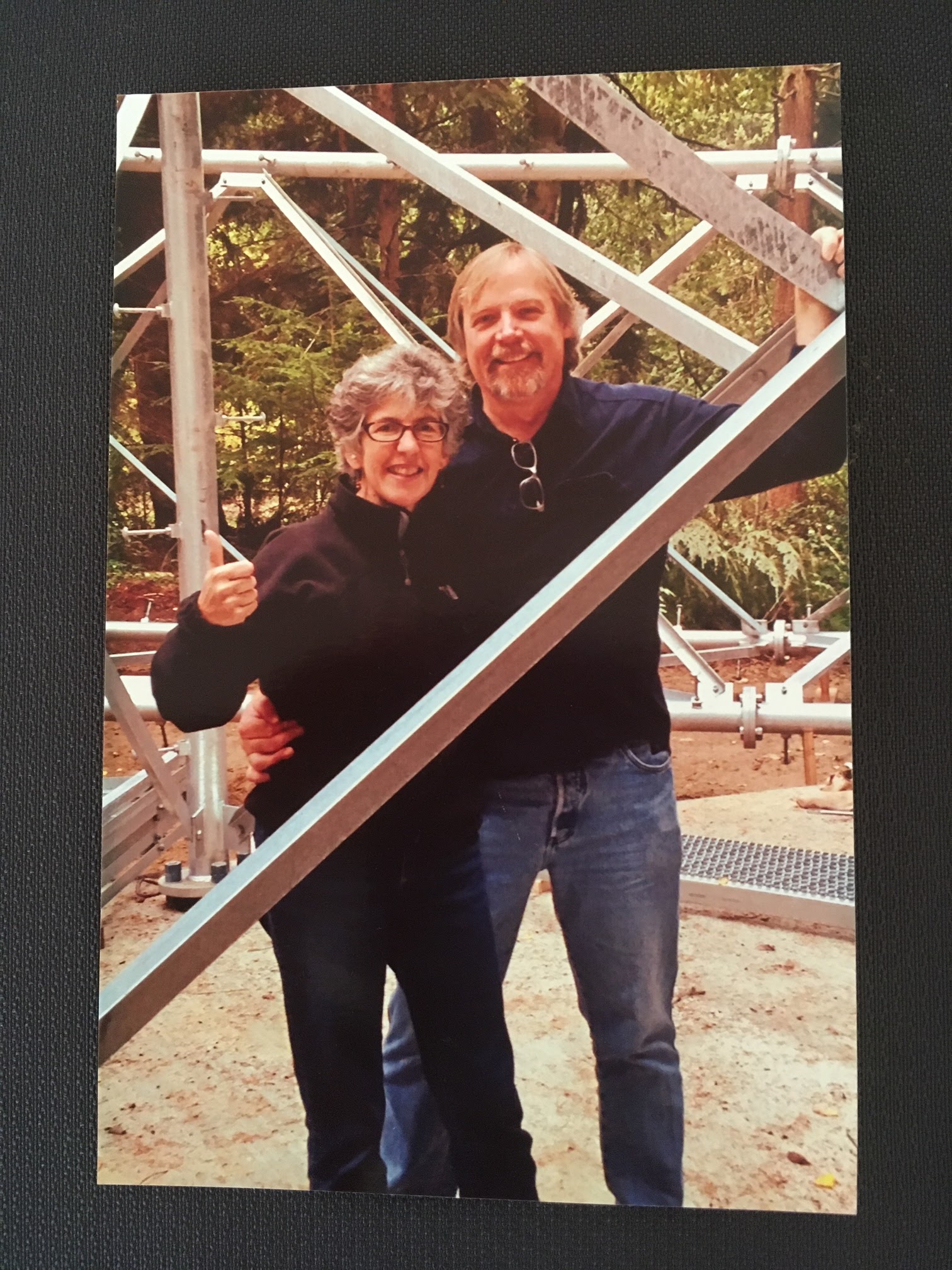
I started falling in love with Tom over the radio after he'd invited me to listen in as he served as a substitute DJ for KSER in Everett. Between his eclectic, enlightened musical taste and his made-for-radio voice, I was intrigued. Tom had worked as a commercial radio DJ for many years before starting a career in music supervision for businesses and brands, but his heart was in non-commercial, community-based radio, so he always had at least one radio side project. One of our first dates was to go see a new radio tower KSER put up on Whidbey Island in the fall of 2013. 

After KSER, Tom helped Bellevue College station KBCS fine-tune its programming, especially its afternoon music mix. And after that, Tom and I were spending an idle Saturday in the art gallery at Seattle's Magnuson Park when we spied a flier announcing the formation of a community radio station. The gallery director, Julianna, explained to us how she hoped the Sand Point Arts & Cultural Exchange could land one of the last low-power radio licenses that would be available anywhere. Tom leaped at the chance to help build a station from scratch. Over the next few years, he donated hundreds of hours and recruited other radio veterans to help out with programming and engineering. When SPACE 101.1 launched in October 2017, I think it was among Tom's proudest moments. 

Tom Killorin 1956-2018
Tom believed in the power of radio to bring people together, to help artists of all kinds be heard, and to advance justice. He also believed in radio as the main instrument of music discovery. In the months after SPACE 101.1 went on the air, Tom would drive all over Seattle to see where he could pick up the station's 100-watt signal. Tom had loaded all the songs into the station's original playlist, but he had no control over when they'd play. So he'd be as surprised as anyone to hear what would come next, and this delighted him, nearly as much as he thrilled to a well-crafted set of tunes he'd deal up ("like cards," he always said) from behind a mixing board. 

That's the thing about radio: You never know what you're going to hear. And while I appreciate the nuances of Spotify's algorithms, there's nothing like the human element of great community radio: to blend music and ideas, empathy and education, heart and soul. "Algorithms don't get the blues," Tom would say, relishing the triple entendre in that phrase. (Is it any wonder I fell for this guy?) 

Tom suffered a recurrence of multiple myeloma in early 2018. By June, we knew he'd likely only have a short time to live--yet he was still working on SPACE. I especially remember one morning, sitting with Tom in the intensive care unit at Swedish Hospital, when he wanted to be sure that week's episode of "American Routes" got to the station for airing later that day. Tom downloaded the show onto a thumb drive and had me meet a volunteer outside the hospital to make the transfer. Two weeks later, Tom was gone, but he'd left a legacy. SPACE 101.1 has grown its programming over the past two years to become a pint-sized community radio powerhouse. Tom would be so happy.

Happy Radio Day 2020. In these pandemic times, radio is inherently socially distanced, yet--when powered by people--it fosters real emotional intimacy. Of course, this is why podcasts have become so popular, too. In our separation, we yearn to hear voices.

In honor of Tom--or whoever your favorite DJ may be--please donate to your local community, non-commercial radio station if you can. And remember: As wonderful as it is to have a great radio station float in over the airwaves, community radio is available to everyone, everywhere through the magic of the Internet--and unlike corporate streaming platforms, it's free. My Spotify subscription expired last week, and while I'll eventually renew it, for now I'm just going to let the radio play. 

___

If you enjoy Surely Joy, please consider supporting my work via Patreon. Pledges start at just $3 a month. Thanks for reading!  


Friday, June 12, 2020

Pandemic postcard #13: Anti-racism as a practice

There is no anti-racist certification class. It's a set of socioeconomic traps and cultural values that are fired up every time we interact with the world. It is a thing you have to keep scooping out of the boat of your life to keep from drowning in it.  -- Scott Woods

It's been another monumental week in America as we wrestle with our trio of pandemics: COVID-19, the recession, and our collective awakening over racism. So many of us now feel the urgency of taking a hard look at the complacency and privilege we have enjoyed for so long. Until two weeks ago, I sometimes thought my anti-racist studies were done, that I had graduated and gotten that certification of allyship. Now, I finally understand that anti-racism is a lifelong practice I must undertake together with every other white person.

We will now--hopefully--be giving this issue its due for some time to come. So just as we can't revert to lax hygiene routines, we must now figure out how to make anti-racism a daily practice. I want to define and pursue that practice for myself. You should, too. No one else can do it for you.

For some people, anti-racism will mean being a physical presence in the streets, calling the structures of power and abuse to account. For others, there will be a more inward journey of reading, writing, reflection, and learning. For many of us, it will mean increasing our support of black-owned businesses and black artists. Perhaps the key thing I've learned this past week is that addressing white supremacy must be an embodied journey--one we inhabit not only in our heads, but in our hearts and in our souls, for privilege and racial harm are deeply lodged in our DNA. (Thanks to the conversation between Resmaa Menakem and Krista Tippett from last week's "On Being" for this knowledge.)

Last Friday night, there was a Black Lives Matter protest at a large park near me in Seattle. I didn't attend, but I wound up there on my early morning walk the next day, as I do on many days. The names of people of color who'd been killed by police were chalked every few feet around the half-mile path around the park. I said their names aloud as I circled the loop in a kind of walking meditation. It felt like a start in what I need to do. Writing this post is another step.

Although I've been reading rafts of essays about racism and privilege and white supremacy over the past fortnight, few statements boil the issue down as well as the passage from Scott Woods that I quote at the top of this post. (You can read the whole 2014 essay it comes from here.) If you're viewing this blog on a desktop, you can scroll down to see a 3-D collage I made in 2016 at the end of a year in Wellspring, a program of deep spiritual reflection I've done twice through my church. It's centered on "a palette of practice" that features the tools and values I try to use regularly in my life. The collage hangs on the wall over my desk, so I see it every day. I took my Sharpie this week and added the words "Bail out your boat."

God of our Being, Spirit of Light and Life, help me see and address my privilege every day. Help all my white brothers and sisters begin to reckon with this reality, one step at a time. After 400 years, we may finally be getting a chance to set things right. Let's not turn away now.

Friday, April 17, 2020

Pandemic postcard #5: Farewell, Kelly

Kelly Yost Hove, 1940-2020
It was the early 1990s, and--about a decade out of college--I had finally become a full-time freelance writer. At least that was my aspiration; I didn't have a lot of work at first. But as a former newspaper reporter in Twin Falls, Idaho, the town where I lived at the time, I knew a lot of people. I'm pretty sure it was Judi the bookseller who alerted Sam and Kelly Yost that I could help them out.

Sam and Kelly ran Channel Productions, a small record label that had two releases at the time, both classical piano collections by Kelly. I signed on to help with writing tasks as well as with radio relations, and it's no exaggeration to say I may not have survived my first year as a freelancer without the Yosts. They had plenty of work for me at a time when Channel Productions was adding artists and going full tilt. (Kelly's recordings wound up selling about half a million copies.) As I got busier with other projects--including travel writing and having a baby--Kelly and Sam were always accommodating, welcoming me back whenever I had some time to give them, often accompanied by my infant daughter.

Sam and Kelly eventually parted; Kelly remarried and continued running Channel Productions. I moved to Boise but we stayed in touch; although Kelly was no longer recording, I helped her get her back catalog onto Amazon, and she served as a job reference for me on several occasions. A few more years passed and I moved to the West Coast. In an email exchange during the summer of 2013, I wished her a happy birthday and she wrote back to say she had closed the business, partly because she had been diagnosed with mild cognitive impairment. But she was 73 by then, in good spirits and ready to enjoy retirement with Kent.

I saw Kelly one more time, in 2018 on a rare visit to Twin Falls. Her memory loss was more advanced by then, but she remembered me and I was able to thank her for all she and Sam had done to help me a quarter-century before. I am grateful I had an opportunity to express that gratitude when I did, for Kelly died on Easter Sunday from complications of COVID-19. She was 79.

Kelly's piano playing mirrored her way of being in the world: She was calm, steady, shining quietly from the inside out. She loved her native Idaho and its natural wonders, and she gained fame as far away as Japan, where she was featured in a documentary film, celebrated as much for her environmental activism as for her music. I was truly blessed to know her and to work with her, and my heart goes out to her husband Kent and her son Brook and to the many others now mourning her loss.

Rest well, Kelly.
 
___
 
If you enjoy Surely Joy, please consider supporting my work via Patreon. Pledges start at just $3 a month. Thanks for reading!  

Saturday, February 29, 2020

Small steps and giant leaps

Here it is again, that only-every-four-years opportunity to do something extraordinary. I’ve always tried to make February 29 special. Four years ago, it marked the first day of my renewed freelance career after I’d spent a few years drawing a regular paycheck, and also the day I interviewed for and was offered a job as a Major League Baseball guest services staff member.

Today, though, I am exhausted. It’s the last day of my five-week sabbatical in Guadalajara, Mexico. I slept badly last night, a mosquito tormenting me despite the repellent I’d splashed behind my ears. I had to drag myself to teach an 8:30 English class for six teenagers. (I graduated from my Teaching English as a Foreign Language course yesterday, but I’d requested a chance to teach young learners and my school obliged with a late-breaking assignment, so off I went.)

It’s still only noon and it’s my last day in Mexico. I’ve had a small nap and I ought to do something fun! I still haven’t been to Tlaquepaque, the charming smaller city near here. That was my plan for today. But I’m simply too tired to do anything but hang out in my apartment, pack my stuff, maybe read and watch Netflix a bit. Besides, it’s hot outside—I am so ready to get back to cool, green Seattle—so why shouldn’t I spend most of my last day here holed up in my apartment, a fan whirring at my side? The fact is I have worked really hard these past five weeks, as hard as I have ever worked in my life (which is saying something) and I think I will visit Jalisco again someday. So if I’m suffering a momentary lack of ambition ... so be it.

Our lives can go awry when we never get off the couch. They can also go sideways when we do nothing but go-go-go. Pacing is everything, right? For years now, I have been trying to find my way toward doing less and being more. I am proud of what I have accomplished over the past month, and I know I will be busy again sooner than I’d like. For now, I just want to sit.

Friday, December 13, 2019

Hindsight is 20/20

As this year winds down, we're also wrapping up a decade. I'm seeing lots of lists recounting the best music, movies, and more of the past 10 years. Right now, I feel most compelled to reflect on the best decisions I made over the 20-tens. I think these are the main ones for me, and I'd be interested to hear yours.

I decided to live debt-free. During the first iteration of my freelance career, I had a big fat line of credit and I used it, amassing debt to write travel guidebooks and magazine articles for publishers who rarely paid expenses. I figured that unreimbursed expenses and interest were all deductible. But paying off the steep interest meant I couldn't save as much as I'd have liked toward my daughter's college fund nor for my then-far-off retirement.

Ten years ago this month, I made my last payment on my business credit card and closed it for good. Since then, I've continued to use credit to earn travel points, but I pay off my balances every month. After owning two homes and settling two estates, I've decided I prefer being a renter. Property is a good investment for many people--but it ties you down; it's not my American dream. I like the freedom and flexibility of letting someone else make and manage that investment. 

I followed my heart. This meant leaving Idaho (and family and friends) for the chance to live among people able to elect leaders who could advance the values I hold deeply--of prizing human diversity, of living more sustainably, of practicing generosity on a civic as well as a personal level. Our country's future is murky, but I feel blessed that I live in the city, state, and region that I do. I also feel great affection for the places and people I left behind; I know people have many reasons for staying where they do.

Following my heart also meant leaving a long and good-enough marriage for a new relationship that showed me a new level of what love could be--both the highs of finding a true companion and the lows of illness and death. It was a painful journey in many ways, yet I am grateful to both men for the love and understanding they gave me and thankful that I was able to be part of their lives.

I distanced myself from politics. Anguished by an unnecessary war in Iraq and inspired by examples of civic imagination, I spent most of the first dozen years of this century enmeshed in politics, trying my best to help candidates and causes from Howard Dean to strong public schools to a sustainable climate. It was time well spent, but I ultimately felt I needed to return to the objective stance I'd learned as a young adult--to my roots as a journalist.

It's funny: I was drawn into journalism by one impeachment--a national crisis that saw a president resign before he could be fired. Now, with another impeachment unfolding, I feel intensely lucky that I've found ways to make a living as a writer and editor that don't require me to cover politics. As I outlined in this essay last year, I pay attention to the news, but as a matter of self-preservation, I'm no longer obsessed by it. I'm inspired by people who act with integrity, saddened that facts are considered malleable, and certain we will get the government we deserve in these distracted, disrupted times. But I know that individually, we don't have to be defined by that government.

Hindsight is 20/20, and the three decisions above are ones that I see giving shape to other decisions I'll be making over the next 10 years--as much as any of us can really decide anything anymore in a future that seems to be spiraling out of control.

I don't want to look away; I want to stay on top of what's going on. I want to see the good as well as the bad and the uncertain. I want to keep bearing witness to the idea that our small daily decisions for joy and kindness and responsibility to and love for others and ourselves may somehow add up to ... something.

Thursday, September 19, 2019

To be with one another

My friend Cai recently posted a bucket list on Facebook. Along with wishes for far-off travel and adventure, she said she hopes to meet each of her Facebook friends in person.

Remember a few years ago—well, maybe it’s been a decade or more—when we started using the acronym IRL (in real life)? It seems quaint now, since so much of our lives are lived online, mediated and facilitated and sometimes complicated by our screens, but as real as can be.

Sort of. I’m writing this on my “phone” (and I did actually make a call on it today, amid the emails and texts and updates) as I’m sitting outdoors, in nature, for what feels like the first time all week. I remind myself to look up and out, not just down, but so much happens in these few square inches: Friends posting photos from their travels. Classmates organizing our reunion. Another friend's successful surgery. Smiling babies, sleeping cats, people imperiling the real world, people imploring us to act before it's too late. And you ... you are reading this on a screen right now, and I thank you.

And yet there is a world IRL, beyond the screens, the world that Cai wants to experience. One of my Facebook friends recently traveled from her home in Washington, DC, to the other Washington. She messaged me the week before, wondering if I wanted to get coffee.

I have a lot of Facebook friends, given how I’ve lived in a lot of places and had a lot of jobs in my dozen years on the site—and especially how I used it in its early years, as an organizing tool. I racked my brain and tried to remember how I’d met this person. I couldn’t recall, but from her profile, it was clear that we share some key interests and could have a good conversation--and so mindful of Cai’s vow to meet all her Facebook friends IRL, I accepted the invitation. My correspondent reminded me which of our mutual friends introduced us online a decade or so ago and confirmed that no, we had not actually met face to face.

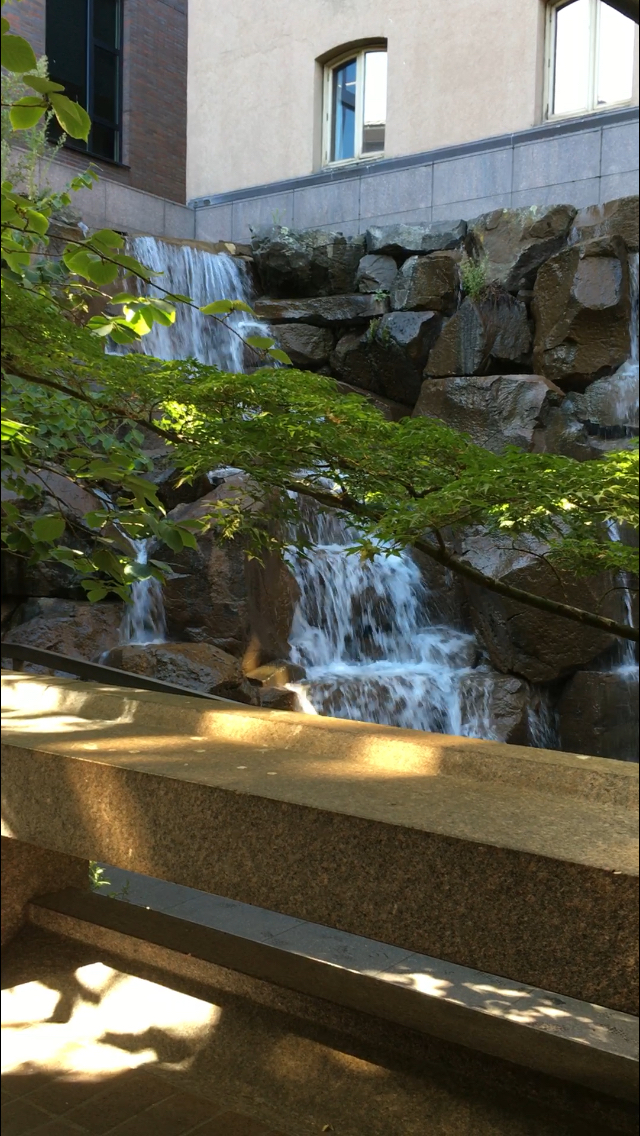
But now we have. I passed a fine late-summer hour talking urbanism and walkability and travel with Eileen in a favorite little park in Seattle, a place I’m always eager to be sure visitors see. I won’t tell you more here, because if we are friends on Facebook or Twitter or Instagram or LinkedIn, I’ll tell you once you get in touch to tell me you’re in Seattle and want to meet up IRL.
We'll go here when we meet IRL in Seattle.

Thank you, Eileen, for reaching out to meet when you were here. Thank you, Cai, for challenging us all to seek each other out.

A postscript: My daughter was a bridesmaid last weekend and she mentioned that everyone kept their phones put away during the ceremony. This surprised me a little--and delighted me, too. The couple hired a great photographer and let her document the event so everyone else could be fully present in the moment (though someone did crack a joke about doing a Facebook Live of it).

Natalie reported that she actually kept her phone stowed in her bag the entire wedding day, the longest time she can remember going without it except while camping. For this reason and others, I am not too worried about the Millennials. (And big congrats, Kelli and Gus.)

Saturday, July 27, 2019

Belonging

One of the things I like best about my part-time job at the ballpark comes into full flower now in midsummer, when I get to talk with people visiting us from all over the world. Many are in Seattle at the start or the end of a cruise to Alaska. Others are here to escape their hot weather back home. That's a roll of the dice--it can be warm and sunny here one day, as it was yesterday, or rainy and coolish, but there's always something to do on those days, too.

Earlier this year, I felt like running away--from the long, dark Seattle winter, and from a house that never really felt like home after Tom was gone, because Tom was my home. I soon realized that I needed to stay in Seattle to tie up loose ends here, anyway, and it would take most of this year--so I signed a short lease for the place I'm living now, nearly certain I would move on this fall. But now I'm nearly certain that I won't.

For one thing, I have moved five times since 2012, and I'd just like to stay put for a while. I like my apartment a lot, and I may well have to move again in a few years as urban renewal proceeds all around the low-slung 1950s courtyard complex I currently call home.

Mostly, though, it's the trees and the sea telling me to stay put. In June, I drove to a special place on Hood Canal, Harmony Hill, where Tom and I attended a stem cell transplant survivors' weekend just two months before he died. As I walked the labyrinth around an amazing old tree, I heard myself or someone or something tell me, "There's a reason you're here."

I heard the same thing last week while at family camp on Seabeck Bay, as I took communion with the herons and seals and my human beloveds--and again yesterday, my birthday, as I treated myself to an afternoon spent looking for (and finding) more seals, orcas, eagles, and other neighbors from the wild world. The truth is, I was just happy to be out on the Salish Sea on a glorious summer day; the animals were a bonus.  And today, it is raining, which I've come to feel is just fine, too, especially if it keeps our forests dry after two summers aflame.

This post is, yet again, about allowing myself to change my mind and about being a work in progress, even well into my sixth decade of life. It's partly about connecting to a place I didn't necessarily choose when I first moved here to be closer to Tom, but a place that apparently has chosen me.

There's a reason I'm here. Maybe it's to be an unofficial ambassador to the people I meet at the ballpark, or in line as we wait for our boat trip. Maybe it's to help new neighbors learn English--something I plan to do as a volunteer once I earn my TEFL credential next winter. Maybe it's even to take a full-time job at the company for which I've been freelancing for a couple of years, or at the university or the library. Maybe it's something I've yet to discover. More will be revealed, I'm quite sure.


PS You can read more of my writing about Seattle and nearby here. And if you're an editor looking for a feature story or essay about the Pacific Northwest, it's your lucky day because I'm your huckleberry.

Friday, February 15, 2019

More will be revealed (again)

I'm moving today--or at least starting a move that will unfold over a few weeks, since I'm not going far and I still have work to do settling Tom's estate. My new address will be the 21st place I've lived in my life and the sixth in the past seven years. (You read that right: Boise to Oakland in 2012, Oakland to Seattle in 2013, then two apartments in Seattle, then here with and without Tom--and now back to Seattle. )

The house I'm leaving has never really felt like home, except when Tom was here.  His presence was strong in the first weeks after he died, but soon this too-big-for-one place felt empty, even with the volumes of stuff I'm still sorting through eight months later.

I could write more about that (and I will), but this is a post about my next stop, a tiny studio apartment/townhouse hybrid I've mainly chosen because it's on the ground floor (for a relatively easy move); in a walkable, transit friendly neighborhood; and I was able to sign a short lease. It's possible--maybe even likely--that I may move again before the end of 2019.

Or it's possible that this new, tiny place will be just enough, just what I need. It's inexpensive by Seattle standards, possibly cheap enough that I can afford to leave for a few weeks to go somewhere warm each winter if I decide to stay in the Northwest.

Or I may feel a pull to move one more time, either in Seattle or to somewhere else, ideally somewhere I might live for more than a few years. It's also possible I may decide to claim no fixed address at all--to fully embrace my peripatetic ways.

As you can tell, I really have no idea. This year will be about trying to sort that out--trying to divine my own wishes after the most intense year of my life.

Although I write infrequently here, I journal every day. I'll be starting a new journal to accompany this move; I decorated it a few days ago. The photo above is from the New Internationalist calendar a few years ago. The ticket stub from an Elizabeth Gilbert lecture a few years ago has my favorite quote from that night: "Be a highly disciplined half-ass."  The poem is by Jan Richardson, a favorite of mine since I first heard it in UU Wellspring a few years ago and an especially apt one for this new season of discernment:

Travel the most ancient way
of all:
the path that leads you
to the center
of your life.

See you around again soon.

Monday, December 17, 2018

In praise of the pivot

I write today with one simple idea: It's fine to change your mind, to flip flop, to revise course.

I say this for myself as I contemplate the infinite variety of choices I might make for my next chapter of life.

I say it for you and your loved ones, because the best gift we can give ourselves or someone we love may be permission to change direction, even in matters as big as political persuasion, religious affiliation, sexuality, or career.

And I say it for our country and our world because brinksmanship and inflexibility are inhumane. There's always another way forward, even if some will choose to call it a retreat.

When we pay attention, we can see the power of principled, thoughtful course correction (or at least the possibility of it) around us every day, even among people whose views may be vastly different from our own. I heard two examples in 15 minutes of radio news this morning. In the first, a Republican strategist urged the president to pivot away from his demand to build a wall on the U.S.-Mexico border and explained how he could save face doing so. In the second, a Christian writer who penned a bestselling book on saving sex for marriage has asked his publisher to stop printing new copies of it. He hasn't turned his back on his beliefs, but he's seen the harm and heartbreak that an inflexible approach to life and love can cause. 

We can see examples among friends and family, too. One of my dear ones was leaning toward getting a new job in 2019 until a heartfelt talk with his boss made him realize how much he values his current working relationship and how much he might contribute in the coming year. Of course, new facts and feelings could make him change his mind again--and that's OK, too. When we feel free to change our minds based on new evidence, the happier we can be.

Personally, the only thing I know with certainty is that I'll be moving again in a few months. I'm eager to leave a house that really only felt like home to me while Tom was here--and I am inclined to leave (at least in winter) a region that is cold and damp and sees only eight hours of daylight this time of year.

With my portable career and love for new vistas, I am truly spoiled for choice. One day, one hour, one minute, I think I know exactly where I want to go and what I want to do first, then I see another possibility and think "hmmmm ..." And there are certainly other opportunities of which I'm not yet aware, too.

At some point, I will need to decide where I want to be, at least for a while. The beautiful thing is that need not be my final decision. And whatever choices you make today need not be your final decisions, either.

Friday, October 26, 2018

Living with death

Halloween has never been my favorite holiday. I don't like to play dress up and I'm not drawn to the macabre; when my daughter and I visited Paris, the catacombs were high on her to-see list and I couldn't have cared less--so I skipped them, took a walk while she waited in the two-hour line, then sat in a sunny park and read a book.

I tried to go back to church in August for the first time since Tom died. I was doing OK until a woman wearing a black-and-white skull motif sweater materialized in front of me and suddenly I had to follow her along the narrow path--a person going to church, in August, wearing a sweater with skulls. Some people really like Halloween.

But not me. So I didn't plan to watch A Ghost Story last night. But I did, and I'm glad, and if you miss someone you loved very much, you might like it, too.

A 2017 release, A Ghost Story is directed by David Lowery and stars Casey Affleck; the two of them teamed up again this year on The Old Man & The Gun, which I saw earlier this week. There's a lot to like about The Old Man & The Gun: its attention to detail, its occasional meandering talkiness (since the character played by star Robert Redford is the taciturn sort, sidekick Tom Waits gets to deliver the movie's best monologue), and above all its meditative quality--yes, a movie that's ostensibly about robbing banks is really about knowing what makes life worth living.

I looked up what else Lowery has made, and I remembered hearing that there was more to A Ghost Story than its title and Halloween-costumed title character. I decided to watch, and I fell into it immediately. Imagine the most perfect moments you ever had with the person you loved, and how those perfect moments lived in an imperfect love that was still far more than enough. Imagine trying to reclaim those moments and--along the way--being of comfort as your beloved deals with your loss. This is what A Ghost Story seems to be about.

I went to bed right after watching A Ghost Story. A soft Seattle rain fell outside the window, and I could imagine having Tom there with me, curled up together as we had been so many times, just like that.

It'll never happen again. What matters is that it happened.

Sunday, October 7, 2018

Steady joy

This a a wonderful day. I've never seen this one before. -- Maya Angelou on Twitter, May 17, 2013 *

It's a hard time for so many. My nation is bruised as badly as it's ever been. I have spent a little more time than I usually do with the news because I want to empathize with what others are feeling and thinking at this raw time. But as usual, I feel it's best to consciously ration my media consumption. (Here's an essay I wrote about that for 3rd Act Magazine.)

It's a sour and confusing season we're living through. I feel this keenly, as personal grief over the loss of my beloved and brilliant Tom suffuses my days and nights--and yet amid this cultural acrimony and wrenching personal loss, I can still seek and I find the steady hand of joy. Maybe not every minute or every hour, but every day, often enough.

I named this blog for Henry David Thoreau's affirmation that "surely joy is the condition of life." But another quote about joy speaks to me now: Brother David Steindl-Rast's observation that joy "is the happiness that doesn't depend on what happens." This is steady joy, and it's a gift to be treasured--and a practice to be cultivated--especially at a time like the one we find ourselves in.

That's all the wisdom I have to offer right now, but you might enjoy this lovely "On Being" conversation about gratitude between Brother David and Krista Tippett.

* The great poet Angelou indeed made a "mistake" in this tweet; of course, she meant "This is a wonderful day." For whatever reason, she never edited her tweet, and I won't, either, even though I make my living as an editor. OK, one more thought, courtesy the Rev. Lindasusan Ulrich of BraverWiser: "Spirit of Compassion, remind us that our task as humans is not perfection." Amen to that.

Appletree Cove, Kingston, Washington. Photo by Julie Fanselow

Tuesday, March 27, 2018

Many, many thanks

Sixth in a series for #UULent2018.

Today's UULent word is gratitude. As I've noted a few times, I'm taking part in UU Wellspring--Spiritual Practices at my church. As befits our spacious Unitarian Universalist faith, we are encouraged to try any number of practices to see which ones work best in our lives. Back in January, we were encouraged to begin a gratitude journal: basically, to take time every night before bed to write down five things for which we were grateful that day.

I've fitfully kept gratitude journals before, as far back as 2005. This time, though, I've done it faithfully nearly every day since starting January 3. Two weeks after I started, I wrote, "This was a good exercise. It helped me recognize how grateful I am for my life as it is right now and that little things mean the most."

I like the idea of going to sleep with a grateful heart, but I've found that it's easier for me to write my gratitudes as part of the quiet mornings I enjoy most days: often before I read a while, sometimes after. Either way, it helps set the stage for a grateful day.

Gratitude journals past and present

Friday, March 23, 2018

The waiting is the hardest part

Fifth in a series for #UULent2018.

Today's UU Lent word is patience. Lord, it's a long, long road.

I had the privilege of seeing Tom Petty perform live twice: once back in the 1980s with Bob Dylan and again last summer at Safeco Field. None of us there for his concert last August knew that he had fewer than 10 shows remaining and that he'd be gone six weeks later. It was all about the moment and the power of music. I'm sure it was the same five weeks later for the people who saw his very last show at the Hollywood Bowl.

Petty's death, especially coming hours after the heartbreaking day in Las Vegas, was a wake-up call for many of us. That's a cliche, but it's true. Stop waiting. Start living.

I've been doing a lot of waiting lately. The client that gave me the largest amount of editing work last year won't need any freelance help for a bit (and even that's not guaranteed). Meanwhile, I've been sending out article queries and essays and letters of interest. It usually feels like these are going into a void and, given the amount of email most of us get these days, I rarely expect a reply.

I have exactly one assignment at the moment, and it's not going well. I need to interview a handful of people in their 50s or 60s who've moved to Edmonds, Washington, from beyond the Seattle area, and I've sent several dozen inquiries to people who might know of such folks. So far, I have found none. Fortunately, I still have about a month until my deadline, so I'll start walking the streets of Edmonds soon in hopes of randomly finding my people. It's not a big place, and wandering its charming downtown is a fine way to spend time, so this isn't exactly a problem--and my inquiries elsewhere may yet bear fruit. Still ... it's more waiting. (And if you or someone you know recently relocated to Edmonds from outside the Seattle area, please raise your hand.)

So my writing and editing work is a big ball of waiting right now. But many other things are just fine. Baseball starts soon, and I'll be back for a third season as an usher at the ballpark. I've had more time to meditate, read books, run errands, do spring cleaning, help my partner, and take long walks. I also have more time to do my favorite thing in the world, and that's travel. My sweetheart and I have a train trip planned soon, and I'll be going to the wild edge of Scotland a month after that, volunteering to get garden beds ready for spring and taking inexpensive room and board in trade for my efforts.

I left full-time work again just over two years ago because I value time more than money. It's a hard way to live at times, and patience has never been my strongest virtue. I get better at it all the time, though, and I'll keep practicing--and living like there may be no tomorrow, or thousands of tomorrows.

Tuesday, February 27, 2018

In defense of surrender

Second in a series for #UULent2018

Today's #UULent word is surrender, a word that has such a negative connotation in our culture: of defeat, of compromise, of being wrong, of giving up and giving in.

I've come to defend surrender.

I've been thinking a lot this winter about the Buddhist concept of "not knowing." It arose in the wonderful book my UU Zen group has been reading over many months, If You're Lucky, Your Heart Will Break by James Ishmael Ford. It came up again in my book club's February selection, This Is How It Always Is by Laurie Frankel. Not knowing. The middle way. Comfort with ambiguity. Deep agnosticism, as Ford put it.

In this context, surrender needn't mean defeat. It can mean acknowledging that you don't have all the answers. Should I leave my job with benefits to start a business? Should I marry this person? Should I participate in this clinical drug trial?

Surrender can mean moving ahead without having all the information you'd need to make what many people would call a rational decision. No matter how many Google searches you do, no matter how many friends you consult (on Facebook and face to face), no matter how many studies and self-help books and op-eds you read, no matter how many TED talks and YouTube videos you watch, no matter how many pro-con lists you make, sometimes you need to--or you might simply want to--follow your gut or your heart or your soul and move forward, despite the not-knowing.

Surrender can also mean giving up the idea that you must have an opinion on everything. It's the realization that you need not judge every person, every situation, and every circumstance you encounter. That form of surrender can be incredibly freeing, especially in the political and cultural climate we have today.

If you're reading this blog, odds are good you've read or heard "The Guest House" by the 13th century Persian mystic Rumi, but I'll include it here to refresh your memory (and if it's somehow new to you, you're welcome!):

This being human is a guest house.
Every morning a new arrival. 

A joy, a depression, a meanness, 
some momentary awareness comes
As an unexpected visitor.

Welcome and entertain them all! 
Even if they're a crowd of sorrows
who violently sweep your house
empty of its furniture,
still treat each guest honorably.
He may be clearing you out 
for some new delight. 

The dark thought, the shame, the malice,
meet them at the door laughing, 
and invite them in. 

Be grateful for whoever comes, 
because each has been sent
as a guide from beyond. 

In other words, if I'm understanding Rumi (as translated by Coleman Barks), you don't need to rail against every politician with whom you vehemently disagree or curse every jerk who makes your life miserable. Nor do you need to sacrifice your ideals and values. But judicious acts of surrender can free you to have new insights, new experiences, and new delights that you may not be open to if you are consumed by the unhappy dogmas, habits, and plagues that are continually being visited upon us as part of being human.

Being comfortable with ambiguity, uncertainty, and surrender takes practice. (I figure I'll be practicing it for the rest of my life.) Since this is Lent, I'll end with a few more verses from Rumi (these are from "A Necessary Autumn in Each"):

There's a necessary dying, and then Jesus is breathing again.
Very little grows on jagged

rock. Be ground. Be crumbled, so wildflowers will come up
where you are. You've been 

stony for too many years. Try something different. Surrender.


Monday, January 15, 2018

In the name of love

Today is the day we honor the life and work of the Rev. Dr. Martin Luther King, born January 15, 1929. What would he make of what we've made of our country?

Winter's dark days give us ample time for reflection, and an excuse to make the most of the light. Here in Seattle, we've had a spectacular holiday weekend: dry, clear, warm all three days. Such a gift.

For a long time, Tom and I have wanted to make the short trip to Whidbey Island to hear our friend the Rev. Dennis Reynolds preach at the Unitarian Universalist congregation he serves there. Yesterday was the day we finally made it, and it felt like we were meant to be there. Dennis was likely not the only minister who'd planned a sermon about Dr. King and found himself rewriting it late last week in the wake of words spoken in the White House.

But the bones of Dennis' message remained intact, and they were the bones and sinew and soul of Dr. King and other prophets, ancient and modern, who tell the truth. "Darkness cannot drive out darkness; only light can do that. Hate cannot drive out hate; only love can do that," King wrote. More than ever, King's words urge us on toward commitment, and Dennis spoke of modern prophets, including the Rev. William J. Barber, who continue to carry a message of nonviolence, justice, and advocacy for the poor. Dennis finished his sermon with the entirety of Langston Hughes' "Let America Be America Again." Starkly juxtaposed against the past week -- but in fact the past year, the past decade, our entire history as a nation -- the 1935 poem is as relevant as ever.

America will be, but we're not there yet.

And yet hopeful signs abound. Here are a few others I've found just in the past week:

I read the Rolling Stone interview with Bono, then sat down to listen to Songs of Experience. My favorite song on the new U2 record remains the first single, "Get Out of Your Own Way." It starts as a plea for a woman to leave her abuser; it ends (in the segue to "American Soul") as a call for a singular country to fulfill its destiny. It's #metoo meets man-splaining, perhaps, but it's also the world begging America to become America.

Rick Steves has a new blog post about how his own family immigrated to America from Norway--at the time, "a miserable place to live...a land without promise." They arrived in Duluth, Minnesota, with $20 and thought of it as the Promised Land. We are and always have been a nation of immigrants, Rick adds, noting that while we may have a leader who fears and loathes immigrants, "I believe America is more American than that -- and that we're waking up." (Disclosure: I am a contract editor for Rick's guidebook division, and I feel blessed to be aligned with his company and his world view. Travel is the best way to trump ignorance and fear.)

Finally, after seeing it on so many Best-of-2017 lists, Tom and I watched the movie Mudbound last week. Based on a novel by Hillary Jordan and directed by Dee Rees, this Netflix original film is the story of two families living in the Mississippi Delta in the middle of the 20th century. I loved it on many levels, but especially for its rich detail of the inherent worth and dignity of nearly all of its many characters--and for how it shows us the possibility of leaving our bondage, not just the shackles of slavery, but the chains of thought and habit that keep us spiritually enslaved.

On this MLK Day, I believe we can rise up. I believe we can keep bending the arc of the moral universe toward justice. I believe that together, we can help America be America again.


Tuesday, December 19, 2017

'How not to make everything worse'

Those were the all-capped words on the opening slide of Karen Yin's keynote talk earlier this fall at the Northwest Independent Editors Guild's Red Pencil Conference. "Thank you to the Guild for asking me to come talk about everything that's wrong with the world," said Yin, founder of the Conscious Style Guide, noting that life today seems like one horrific event after another. "There's no give and we're all getting crushed," she added.

Yin is also the creator of the AP vs. Chicago website, which hashes over how different sources treat things like spaces with em dashes and whether or not to use an apostrophe after a proper noun ending in "s." Yet as Editors Guild president Jill Walters noted in introducing Yin, "Nobody's really going to care if you split an infinitive on Twitter." Larger things than grammar are at stake in our world right now, and Yin offered ideas on how editors can conscientiously foster compassion and healing in a world that seems set on rage autopilot.

Among what she said: Toxins in our communication enter our system and create trauma. Handling language mindfully is part of our job. Yin proposed this four-point set of guidelines: Tell the truth. Don't exaggerate. Be consistent. Use peaceful language.

It is so easy to be pissed off all the time these days. I used to think of anger as righteous. Now I see the ability to keep my rage in check as its own form of resistance, not to mention a robust spiritual practice. It's the best I can do. Call out injustice, then cultivate calm.

It's heartening to see signs that the tide may be turning -- and of course the light is coming back soon, too. As Karen Yin told our editors' gathering, we can choose not to make everything worse.  We can choose compassion and kindness, even as we share truths that must be told.