As this year winds down, we're also wrapping up a decade. I'm seeing lots of lists recounting the best music, movies, and more of the past 10 years. Right now, I feel most compelled to reflect on the best decisions I made over the 20-tens. I think these are the main ones for me, and I'd be interested to hear yours.
I decided to live debt-free. During the first iteration of my freelance career, I had a big fat line of credit and I used it, amassing debt to write travel guidebooks and magazine articles for publishers who rarely paid expenses. I figured that unreimbursed expenses and interest were all deductible. But paying off the steep interest meant I couldn't save as much as I'd have liked toward my daughter's college fund nor for my then-far-off retirement.
Ten years ago this month, I made my last payment on my business credit card and closed it for good. Since then, I've continued to use credit to earn travel points, but I pay off my balances every month. After owning two homes and settling two estates, I've decided I prefer being a renter. Property is a good investment for many people--but it ties you down; it's not my American dream. I like the freedom and flexibility of letting someone else make and manage that investment.
I followed my heart. This meant leaving Idaho (and family and friends) for the chance to live among people able to elect leaders who could advance the values I hold deeply--of prizing human diversity, of living more sustainably, of practicing generosity on a civic as well as a personal level. Our country's future is murky, but I feel blessed that I live in the city, state, and region that I do. I also feel great affection for the places and people I left behind; I know people have many reasons for staying where they do.
Following my heart also meant leaving a long and good-enough marriage for a new relationship that showed me a new level of what love could be--both the highs of finding a true companion and the lows of illness and death. It was a painful journey in many ways, yet I am grateful to both men for the love and understanding they gave me and thankful that I was able to be part of their lives.
I distanced myself from politics. Anguished by an unnecessary war in Iraq and inspired by examples of civic imagination, I spent most of the first dozen years of this century enmeshed in politics, trying my best to help candidates and causes from Howard Dean to strong public schools to a sustainable climate. It was time well spent, but I ultimately felt I needed to return to the objective stance I'd learned as a young adult--to my roots as a journalist.
It's funny: I was drawn into journalism by one impeachment--a national crisis that saw a president resign before he could be fired. Now, with another impeachment unfolding, I feel intensely lucky that I've found ways to make a living as a writer and editor that don't require me to cover politics. As I outlined in this essay last year, I pay attention to the news, but as a matter of self-preservation, I'm no longer obsessed by it. I'm inspired by people who act with integrity, saddened that facts are considered malleable, and certain we will get the government we deserve in these distracted, disrupted times. But I know that individually, we don't have to be defined by that government.
Hindsight is 20/20, and the three decisions above are ones that I see giving shape to other decisions I'll be making over the next 10 years--as much as any of us can really decide anything anymore in a future that seems to be spiraling out of control.
I don't want to look away; I want to stay on top of what's going on. I want to see the good as well as the bad and the uncertain. I want to keep bearing witness to the idea that our small daily decisions for joy and kindness and responsibility to and love for others and ourselves may somehow add up to ... something.
Friday, December 13, 2019

Monday, November 11, 2019
In search of the strong and the trusted
Today is Veterans Day. Last night, I spent
some time looking over letters my dad sent home during his Navy days at the end
of World War II. Like most young adults serving in that era, he didn't
understand everything he was asked to do, but he had trust that the
people in charge were looking out for him.
I've been thinking a lot about our military
these past few weeks, especially the people on the ground in the Middle East,
and about the Ukrainian military, too. And I've been thinking about a song Nick
Lowe penned 45 years ago that has more resonance than ever before. "Where
are the strong and who are the trusted?" Lowe asked in "(What's So Funny 'Bout) Peace, Love, and Understanding?" Indeed.
There's a new book out, It
Shouldn’t Be This Hard To Serve Your Country. Its author, David Shulkin, had
served 18 months as Under Secretary of Veterans Affairs for Health in the Obama
administration and he assumed he’d leave the job when Donald Trump took over.
But no one told him one way or another, and he learned via a Trump press
conference on cable TV just nine days before the 2017 inauguration that not
only would he keep his job, he’d be heading the VA. If that seems irregular, it
was nothing compared to what was to come.
Speaking with The New York Times on The Daily a few weeks
ago, Shulkin related that his first six months on the job were ones of great
productivity since he was able to continue work on changes he’d begun in the
previous administration. But it soon dawned on Shulkin that political
appointees were working behind the scenes on different priorities, especially
to speed up privatization of the VA medical system. Shulkin described how he
became a meme when Trump, during a televised meeting in the Roosevelt Room,
asked whether Shulkin would be attending a meeting that weekend at his Florida
estate on veterans issues. The VA secretary shook his head no. He hadn’t heard
about the meeting.
On The Daily, Shulkin drew parallels between what he experienced in his year serving under Trump (he was fired via tweet in March 2018) and revelations of the back-channel dealings with Ukraine that are now riveting the nation. I wonder what we’ve yet to learn about why Trump has spent nearly three years scrapping U.S. policies and squandering goodwill everywhere from NATO to Syria.
It shouldn't be this hard to serve your country. Yet from the career diplomats who’ve
testified in the Ukraine probe to the active-duty military personnel asked to
abandon their peacekeeping roles, it’s become very hard indeed.
Which brings me back to Lowe’s
1974 hymn to peace, love, and understanding. In 2011, he told Noel Murray of the
A.V.
Club that he’d come up with the title
first and thought he’d write a song about a hippie bemoaning the 1970s turn
toward cynicism and irony. “It
was originally supposed to be a joke song, but something told me there was a
little grain of wisdom in this thing, and not to mess it up.”
He didn’t mess
it up; Lowe’s song went on to become a hit for Elvis Costello and Curtis
Stigers and it’s been covered dozens of other times, too. It feels like a dirge
to me these days, full of questions and frank longing. We all want to know: Is there
only pain, hatred, and misery? Is all hope gone? Where are the strong? Who can
we trust? Dare we still dream of a government that is civil, capable, and
transparent, or is that all just slipping away?
I still want to
believe that truth will prevail. I am thankful for the people serving our country--those in the military and especially the
civil servants and journalists--who are trying to help us survive these days of
darkness and insanity. Keep doing what you’re doing. Eventually, we're going to
get this sorted out.
Thursday, September 19, 2019
To be with one another
My friend Cai recently posted a bucket list on Facebook. Along with
wishes for far-off travel and adventure, she said she hopes to meet each
of her Facebook friends in person.
Remember a few years ago—well, maybe it’s been a decade or more—when we started using the acronym IRL (in real life)? It seems quaint now, since so much of our lives are lived online, mediated and facilitated and sometimes complicated by our screens, but as real as can be.
Sort of. I’m writing this on my “phone” (and I did actually make a call on it today, amid the emails and texts and updates) as I’m sitting outdoors, in nature, for what feels like the first time all week. I remind myself to look up and out, not just down, but so much happens in these few square inches: Friends posting photos from their travels. Classmates organizing our reunion. Another friend's successful surgery. Smiling babies, sleeping cats, people imperiling the real world, people imploring us to act before it's too late. And you ... you are reading this on a screen right now, and I thank you.
And yet there is a world IRL, beyond the screens, the world that Cai wants to experience. One of my Facebook friends recently traveled from her home in Washington, DC, to the other Washington. She messaged me the week before, wondering if I wanted to get coffee.
I have a lot of Facebook friends, given how I’ve lived in a lot of places and had a lot of jobs in my dozen years on the site—and especially how I used it in its early years, as an organizing tool. I racked my brain and tried to remember how I’d met this person. I couldn’t recall, but from her profile, it was clear that we share some key interests and could have a good conversation--and so mindful of Cai’s vow to meet all her Facebook friends IRL, I accepted the invitation. My correspondent reminded me which of our mutual friends introduced us online a decade or so ago and confirmed that no, we had not actually met face to face.
But now we have. I passed a fine late-summer hour talking urbanism and walkability and travel with Eileen in a favorite little park in Seattle, a place I’m always eager to be sure visitors see. I won’t tell you more here, because if we are friends on Facebook or Twitter or Instagram or LinkedIn, I’ll tell you once you get in touch to tell me you’re in Seattle and want to meet up IRL.
Thank you, Eileen, for reaching out to meet when you were here. Thank you, Cai, for challenging us all to seek each other out.
A postscript: My daughter was a bridesmaid last weekend and she mentioned that everyone kept their phones put away during the ceremony. This surprised me a little--and delighted me, too. The couple hired a great photographer and let her document the event so everyone else could be fully present in the moment (though someone did crack a joke about doing a Facebook Live of it).
Natalie reported that she actually kept her phone stowed in her bag the entire wedding day, the longest time she can remember going without it except while camping. For this reason and others, I am not too worried about the Millennials. (And big congrats, Kelli and Gus.)
Remember a few years ago—well, maybe it’s been a decade or more—when we started using the acronym IRL (in real life)? It seems quaint now, since so much of our lives are lived online, mediated and facilitated and sometimes complicated by our screens, but as real as can be.
Sort of. I’m writing this on my “phone” (and I did actually make a call on it today, amid the emails and texts and updates) as I’m sitting outdoors, in nature, for what feels like the first time all week. I remind myself to look up and out, not just down, but so much happens in these few square inches: Friends posting photos from their travels. Classmates organizing our reunion. Another friend's successful surgery. Smiling babies, sleeping cats, people imperiling the real world, people imploring us to act before it's too late. And you ... you are reading this on a screen right now, and I thank you.
And yet there is a world IRL, beyond the screens, the world that Cai wants to experience. One of my Facebook friends recently traveled from her home in Washington, DC, to the other Washington. She messaged me the week before, wondering if I wanted to get coffee.
I have a lot of Facebook friends, given how I’ve lived in a lot of places and had a lot of jobs in my dozen years on the site—and especially how I used it in its early years, as an organizing tool. I racked my brain and tried to remember how I’d met this person. I couldn’t recall, but from her profile, it was clear that we share some key interests and could have a good conversation--and so mindful of Cai’s vow to meet all her Facebook friends IRL, I accepted the invitation. My correspondent reminded me which of our mutual friends introduced us online a decade or so ago and confirmed that no, we had not actually met face to face.
But now we have. I passed a fine late-summer hour talking urbanism and walkability and travel with Eileen in a favorite little park in Seattle, a place I’m always eager to be sure visitors see. I won’t tell you more here, because if we are friends on Facebook or Twitter or Instagram or LinkedIn, I’ll tell you once you get in touch to tell me you’re in Seattle and want to meet up IRL.
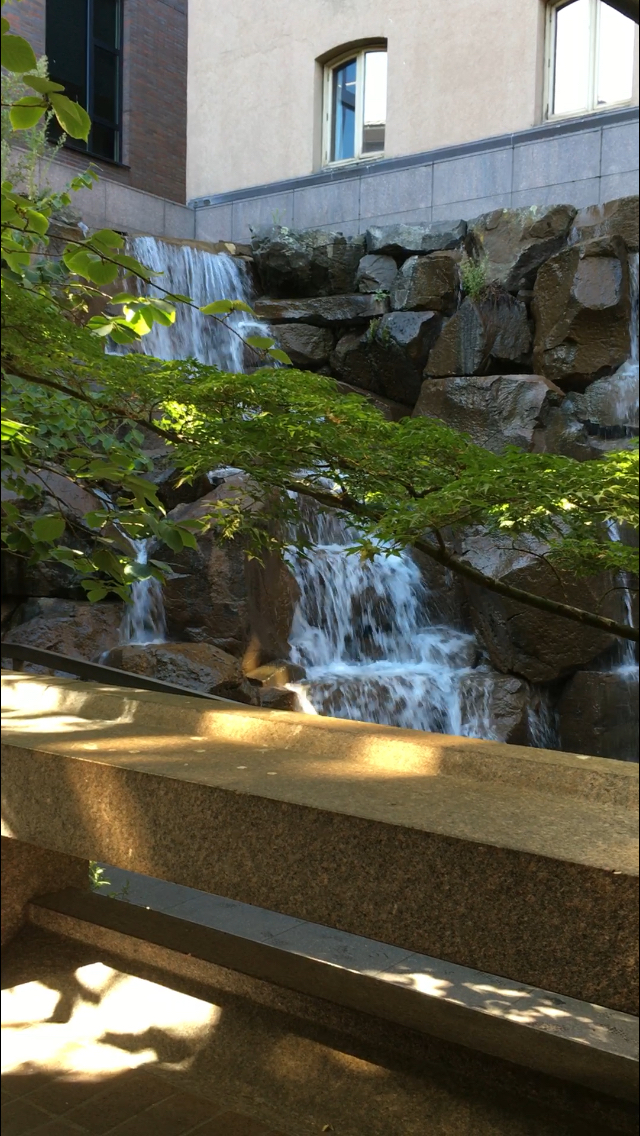 |
| We'll go here when we meet IRL in Seattle. |
Thank you, Eileen, for reaching out to meet when you were here. Thank you, Cai, for challenging us all to seek each other out.
A postscript: My daughter was a bridesmaid last weekend and she mentioned that everyone kept their phones put away during the ceremony. This surprised me a little--and delighted me, too. The couple hired a great photographer and let her document the event so everyone else could be fully present in the moment (though someone did crack a joke about doing a Facebook Live of it).
Natalie reported that she actually kept her phone stowed in her bag the entire wedding day, the longest time she can remember going without it except while camping. For this reason and others, I am not too worried about the Millennials. (And big congrats, Kelli and Gus.)
Wednesday, August 14, 2019
Summer reading!
When I was a kid, I spent untold summer hours reading. It's been a long time since I've had that sort of luxury, but I've read a lot this summer. It's time for a book report.
What I'm reading now
This week, I went to the book launch for Seattle Walk Report: An Illustrated Walking Tour through 23 Seattle Neighborhoods. I showed up about 15 minutes before it started and found one of the last seats in a jam-packed Central Library auditorium--and then I was lucky enough to buy the last copy from a box of books brought in after the first batch had sold out!
The book's creator, Susanna Ryan, was "unmasked" at the event to her fans who'd previously known her only through her charming but anonymous Instagram posts. It felt like the best kind of meeting between the screens where we live so much of our lives and the three-dimensional "IRL" world. Susanna and her posts, and now her book, showcase the sort of quirky details that make a curious life worth living, online and on the streets.
I liked how she spoke about falling in love with walking. (Her longest trek was a 31-mile hike around the northern shores of Lake Washington!) Also notable: her pragmatism about social media. Yes, Instagram is owned by the morally suspect Facebook, but she wouldn't have a book in the world without it.
I didn't have a chance to get my book signed because the line was loooooong. But I'd love to hang out with Susanna someday and discuss our mutual love for libraries and aimless walks. (As she posted on her Instagram today, "I might also just start hanging out in Cal Anderson all the time, sitting by a tree and signing books for anyone who wants to swing by. I want to sign your book if it's the last thing I do!") Meanwhile, I was able to sidle up to Susanna's editor to introduce myself and my own nerdy passion project, Where to Read in the Rain. Ya never know ...
 I'm also currently reading The House of Broken Angels by Luis Alberto Urrea, the saga of a Mexican-American family that is ringing very relevant in our times. I'd previously read Urrea's Into the Beautiful North, and I look forward to checking out more of his work.
What else I've read this summer
More or less working backward over the past few months, I've enjoyed ...
Why We Sleep. Matthew Walker makes the case for why we need eight hours every night and what we miss when we fall short. This book has made me think deeply about a subject most of us take for granted.
The Book of Delights. I love the premise of Ross Gay's book: pay attention. (That's akin to what Seattle Walk Reports does, too.) Gay makes it clear that not all is delightful in our world, but that there are plenty of surprising joys to behold.
The Baltimore Book of the Dead. I spotted this book by Marion Winik while looking for something else at my local library. It's a collection of anonymous mini-obits, mostly of people Winik knew, with lots of connective tissue between them.
The Overstory. One of the best novels I've read in a long time (and the winner of the Pulitzer Prize in that category for 2019), Richard Powers' epic is about resilience and resistance amid impending ecological doom, with a vast cadre of fully realized characters and plot twists galore. It's the most thought-provoking fiction I've read this year.
The Good Rain. I had wanted to read Timothy Egan's 1990 ode to the Northwest for a long time. I've been thinking and writing a lot lately about why I'm drawn to this region, and this book helped me realize that for all of our growth and human ingenuity, the Northwest is first of all a land of incredible and often daunting natural beauty. I'd love to see an updated edition with Egan's thoughts on how the region has evolved--and how its character has stayed constant--these past 30 years.
Lake City. Thomas Kohnstamm's novel is set largely in the Fred Meyer superstore of its gritty titular Seattle neighborhood, where I moved a dozen years after the book's just-past-9/11 setting (and where I still spend a lot of time--I was just there today). With memorable characters, Kohnstamm writes of a class divide that has only deepened in Seattle since the turn of the century.
Next up?
These books are on my to-read list for the rest of summer and into fall ...
M Train by Patti Smith (and her next book, Year of the Monkey, due out this fall)
The Unsettlers by Mark Sundeen
City of Girls by Elizabeth Gilbert
Educated by Tara Westover
Becoming by Michelle Obama
The Harry Potter books. We all need more magic in our lives, which is why I'm re-reading the whole series this year; I'm currently on Goblet of Fire, though I happily keep getting interrupted by library books I've had on hold.
What I'm reading now
 |
| My Seattle Public Library Summer Book Bingo card |
The book's creator, Susanna Ryan, was "unmasked" at the event to her fans who'd previously known her only through her charming but anonymous Instagram posts. It felt like the best kind of meeting between the screens where we live so much of our lives and the three-dimensional "IRL" world. Susanna and her posts, and now her book, showcase the sort of quirky details that make a curious life worth living, online and on the streets.
I liked how she spoke about falling in love with walking. (Her longest trek was a 31-mile hike around the northern shores of Lake Washington!) Also notable: her pragmatism about social media. Yes, Instagram is owned by the morally suspect Facebook, but she wouldn't have a book in the world without it.
I didn't have a chance to get my book signed because the line was loooooong. But I'd love to hang out with Susanna someday and discuss our mutual love for libraries and aimless walks. (As she posted on her Instagram today, "I might also just start hanging out in Cal Anderson all the time, sitting by a tree and signing books for anyone who wants to swing by. I want to sign your book if it's the last thing I do!") Meanwhile, I was able to sidle up to Susanna's editor to introduce myself and my own nerdy passion project, Where to Read in the Rain. Ya never know ...
 I'm also currently reading The House of Broken Angels by Luis Alberto Urrea, the saga of a Mexican-American family that is ringing very relevant in our times. I'd previously read Urrea's Into the Beautiful North, and I look forward to checking out more of his work.
What else I've read this summer
More or less working backward over the past few months, I've enjoyed ...
Why We Sleep. Matthew Walker makes the case for why we need eight hours every night and what we miss when we fall short. This book has made me think deeply about a subject most of us take for granted.
The Book of Delights. I love the premise of Ross Gay's book: pay attention. (That's akin to what Seattle Walk Reports does, too.) Gay makes it clear that not all is delightful in our world, but that there are plenty of surprising joys to behold.
The Baltimore Book of the Dead. I spotted this book by Marion Winik while looking for something else at my local library. It's a collection of anonymous mini-obits, mostly of people Winik knew, with lots of connective tissue between them.
The Overstory. One of the best novels I've read in a long time (and the winner of the Pulitzer Prize in that category for 2019), Richard Powers' epic is about resilience and resistance amid impending ecological doom, with a vast cadre of fully realized characters and plot twists galore. It's the most thought-provoking fiction I've read this year.
The Good Rain. I had wanted to read Timothy Egan's 1990 ode to the Northwest for a long time. I've been thinking and writing a lot lately about why I'm drawn to this region, and this book helped me realize that for all of our growth and human ingenuity, the Northwest is first of all a land of incredible and often daunting natural beauty. I'd love to see an updated edition with Egan's thoughts on how the region has evolved--and how its character has stayed constant--these past 30 years.
Lake City. Thomas Kohnstamm's novel is set largely in the Fred Meyer superstore of its gritty titular Seattle neighborhood, where I moved a dozen years after the book's just-past-9/11 setting (and where I still spend a lot of time--I was just there today). With memorable characters, Kohnstamm writes of a class divide that has only deepened in Seattle since the turn of the century.
Next up?
These books are on my to-read list for the rest of summer and into fall ...
M Train by Patti Smith (and her next book, Year of the Monkey, due out this fall)
The Unsettlers by Mark Sundeen
City of Girls by Elizabeth Gilbert
Educated by Tara Westover
Becoming by Michelle Obama
The Harry Potter books. We all need more magic in our lives, which is why I'm re-reading the whole series this year; I'm currently on Goblet of Fire, though I happily keep getting interrupted by library books I've had on hold.
Saturday, July 27, 2019
Belonging
One of the things I like best about my part-time job at the ballpark comes into full flower now in midsummer, when I get to talk with people visiting us from all over the world. Many are in Seattle at the start or the end of a cruise to Alaska. Others are here to escape their hot weather back home. That's a roll of the dice--it can be warm and sunny here one day, as it was yesterday, or rainy and coolish, but there's always something to do on those days, too.
Earlier this year, I felt like running away--from the long, dark Seattle winter, and from a house that never really felt like home after Tom was gone, because Tom was my home. I soon realized that I needed to stay in Seattle to tie up loose ends here, anyway, and it would take most of this year--so I signed a short lease for the place I'm living now, nearly certain I would move on this fall. But now I'm nearly certain that I won't.
For one thing, I have moved five times since 2012, and I'd just like to stay put for a while. I like my apartment a lot, and I may well have to move again in a few years as urban renewal proceeds all around the low-slung 1950s courtyard complex I currently call home.
Mostly, though, it's the trees and the sea telling me to stay put. In June, I drove to a special place on Hood Canal, Harmony Hill, where Tom and I attended a stem cell transplant survivors' weekend just two months before he died. As I walked the labyrinth around an amazing old tree, I heard myself or someone or something tell me, "There's a reason you're here."
I heard the same thing last week while at family camp on Seabeck Bay, as I took communion with the herons and seals and my human beloveds--and again yesterday, my birthday, as I treated myself to an afternoon spent looking for (and finding) more seals, orcas, eagles, and other neighbors from the wild world. The truth is, I was just happy to be out on the Salish Sea on a glorious summer day; the animals were a bonus. And today, it is raining, which I've come to feel is just fine, too, especially if it keeps our forests dry after two summers aflame.
This post is, yet again, about allowing myself to change my mind and about being a work in progress, even well into my sixth decade of life. It's partly about connecting to a place I didn't necessarily choose when I first moved here to be closer to Tom, but a place that apparently has chosen me.
There's a reason I'm here. Maybe it's to be an unofficial ambassador to the people I meet at the ballpark, or in line as we wait for our boat trip. Maybe it's to help new neighbors learn English--something I plan to do as a volunteer once I earn my TEFL credential next winter. Maybe it's even to take a full-time job at the company for which I've been freelancing for a couple of years, or at the university or the library. Maybe it's something I've yet to discover. More will be revealed, I'm quite sure.


PS You can read more of my writing about Seattle and nearby here. And if you're an editor looking for a feature story or essay about the Pacific Northwest, it's your lucky day because I'm your huckleberry.
Earlier this year, I felt like running away--from the long, dark Seattle winter, and from a house that never really felt like home after Tom was gone, because Tom was my home. I soon realized that I needed to stay in Seattle to tie up loose ends here, anyway, and it would take most of this year--so I signed a short lease for the place I'm living now, nearly certain I would move on this fall. But now I'm nearly certain that I won't.
For one thing, I have moved five times since 2012, and I'd just like to stay put for a while. I like my apartment a lot, and I may well have to move again in a few years as urban renewal proceeds all around the low-slung 1950s courtyard complex I currently call home.
Mostly, though, it's the trees and the sea telling me to stay put. In June, I drove to a special place on Hood Canal, Harmony Hill, where Tom and I attended a stem cell transplant survivors' weekend just two months before he died. As I walked the labyrinth around an amazing old tree, I heard myself or someone or something tell me, "There's a reason you're here."
I heard the same thing last week while at family camp on Seabeck Bay, as I took communion with the herons and seals and my human beloveds--and again yesterday, my birthday, as I treated myself to an afternoon spent looking for (and finding) more seals, orcas, eagles, and other neighbors from the wild world. The truth is, I was just happy to be out on the Salish Sea on a glorious summer day; the animals were a bonus. And today, it is raining, which I've come to feel is just fine, too, especially if it keeps our forests dry after two summers aflame.
This post is, yet again, about allowing myself to change my mind and about being a work in progress, even well into my sixth decade of life. It's partly about connecting to a place I didn't necessarily choose when I first moved here to be closer to Tom, but a place that apparently has chosen me.
There's a reason I'm here. Maybe it's to be an unofficial ambassador to the people I meet at the ballpark, or in line as we wait for our boat trip. Maybe it's to help new neighbors learn English--something I plan to do as a volunteer once I earn my TEFL credential next winter. Maybe it's even to take a full-time job at the company for which I've been freelancing for a couple of years, or at the university or the library. Maybe it's something I've yet to discover. More will be revealed, I'm quite sure.


PS You can read more of my writing about Seattle and nearby here. And if you're an editor looking for a feature story or essay about the Pacific Northwest, it's your lucky day because I'm your huckleberry.
Thursday, July 11, 2019
Enough
I bought a salad spinner yesterday. It wasn't an impulse buy; I'd thought about it a few weeks. Now that I live in 400 square feet, I think harder than ever before adding anything new to my store of possessions.
The salad spinner (ironically made of plastic) won out because I'm trying to use less plastic, so I've stopped buying those oh-so-convenient plastic tubs of pre-washed salad greens--yet I'd quickly grown tired of drying rinsed spinach on towels on my tiny countertop. Yet more irony: I've actually found in previous experience that these salad spinners don't work all that well. Maybe I add too much water? Let me know if you have tips.
Or maybe I should just look at a YouTube video or two ... which brings me to my point for this post: I have an essay in the summer issue of 3rd Act Magazine on "Just Enough Technology." When my friend, the magazine's editor Victoria, asked me to write an article on "Technology We Love," I agreed, as long as I could write a sidebar about bringing balance to our technological lives. It's the second in my series of "enough" essays for the magazine; I wrote about "Just Enough News" last year. "Just Enough Space" might be the theme I explore next. After five months in this little apartment, I am discovering like never before what it really means to live a simple, streamlined life, and I like it very much.
I'll write about that some more another time. Meanwhile, I'm not trying to lifehack my way into getting "just enough" sleep, eating "just enough" food, or experiencing "just enough" love. Instead, I'm trying to learn how to live as intentionally and yes, as joyfully, as I can in a world where hundred-year floods are happening every year and Alaska suddenly feels like California.
The salad spinner (ironically made of plastic) won out because I'm trying to use less plastic, so I've stopped buying those oh-so-convenient plastic tubs of pre-washed salad greens--yet I'd quickly grown tired of drying rinsed spinach on towels on my tiny countertop. Yet more irony: I've actually found in previous experience that these salad spinners don't work all that well. Maybe I add too much water? Let me know if you have tips.
Or maybe I should just look at a YouTube video or two ... which brings me to my point for this post: I have an essay in the summer issue of 3rd Act Magazine on "Just Enough Technology." When my friend, the magazine's editor Victoria, asked me to write an article on "Technology We Love," I agreed, as long as I could write a sidebar about bringing balance to our technological lives. It's the second in my series of "enough" essays for the magazine; I wrote about "Just Enough News" last year. "Just Enough Space" might be the theme I explore next. After five months in this little apartment, I am discovering like never before what it really means to live a simple, streamlined life, and I like it very much.
I'll write about that some more another time. Meanwhile, I'm not trying to lifehack my way into getting "just enough" sleep, eating "just enough" food, or experiencing "just enough" love. Instead, I'm trying to learn how to live as intentionally and yes, as joyfully, as I can in a world where hundred-year floods are happening every year and Alaska suddenly feels like California.
 |
| My kitchen cabinet, new salad spinner up top |
Tuesday, May 21, 2019
Writing down the days
This morning, I am grateful for the wonderful day Tom and I had yesterday (and for Tom's mindfulness in mentioning several times how wonderful it was).
This is a sentence from my journal a year ago today. I mentioned a while back that although I post infrequently here, I write every day in my journal. I'm grateful that I have this practice and I can revisit where I was--physically, emotionally, and/or spiritually--at times in my past.
I've been in a grief and loss group at church this spring, and one of the other participants asked whether I could have coffee to talk about journaling, something she'd like to do more of. We haven't had a chance to do that yet, and I figure other people may be interested, too, so I'm writing some thoughts here.
Although I've kept journals off and on most of my life, I've become much more intentional about it over the past few years. I don't think your journal needs to take any special form, and mixing them up is fine. Mine is often a gratitude journal; I often write first thing in the morning and recount what I was grateful for the previous day. I know other people do the same thing just before bed--write about what they loved in the day just ending, and that seems like a lovely way to finish one's day.
In The Artist's Way, Julia Cameron advocates for writing three free-form, loose-leaf "morning pages" first thing each day, basically as a way to get whatever's on your mind out of your head and onto the page so you can go about the rest of your day. I've done these occasionally, and I think they can be helpful as a creative exercise. For me, though, one of the best parts of journaling is storing my thoughts bound in a beautiful book, either one I've found that I love or one I've made. (I enjoy taking a plain old composition book and pasting stuff on it.)
I have "home" journals for my everyday writing
and "away" journals for when I travel; the latter are wonderful souvenirs. I always bring a glue stick when I travel so I can paste in ticket stubs and other mementos. I leave empty pages for adding other things later, such as photos or even an empty packet of seeds from Monet's garden in Giverny. (Here's a lovely essay from Rick Steves on why he journals as he travels.) I also have an especially nice journal in which I write only once a year, on or near my birthday.
Some people journal online, and if that's the best way for you, why not? Although I do most of my journaling on paper, I use my phone's notes app when I'm out and about and want to capture some thoughts. One digital journaling tool I especially love is the FutureMe website, which allows you to write a letter to yourself to be delivered via email in the future; you specify the date you'd like to receive it, whether a few months or a few years down the road. I've written about a dozen letters to myself via this site, usually when I am going through periods of transition and need to think about how things can and will get better.
 Journals can be tools of optimism. In February 2018, Tom started on a clinical drug trial that we hoped would help him beat back another recurrence of cancer. That month, my Valentine's Day gift to both of us was a guided journal, One Question a Day for You & Me, with room for three years' worth of daily reflections. We only got a few months, but I treasure this book--both for what's in it and the memory of how, each night before bed, I'd ask the day's question and write down our answers.
A year ago, as Tom was caught in a swirl of medical procedures and I helplessly went along for the ride, journaling nearly every day helped me vent my fear and frustration and keep sight of what was good, even in difficult times. "I'm counting up the days and nights I get to spend with this remarkable man," I wrote a year ago today in my "everyday" journal, not knowing how much time we had left ... days, weeks, months, years?
One more thought: Although social media has its downsides, it is a record of your life. Many of us now have a decade's worth of Facebook posts documenting our days, and that is a journal of sorts, too. I try to use my social media time in this way, so if Instagram still exists 10 years from now, I'll remember this beautiful flower I saw on my way home from work one May day in 2019.

Life can be a blur, but if you take some time to write every day, you can see a bit of the shape of your life--where you've been, where you are now, where you may be going.
This is a sentence from my journal a year ago today. I mentioned a while back that although I post infrequently here, I write every day in my journal. I'm grateful that I have this practice and I can revisit where I was--physically, emotionally, and/or spiritually--at times in my past.
I've been in a grief and loss group at church this spring, and one of the other participants asked whether I could have coffee to talk about journaling, something she'd like to do more of. We haven't had a chance to do that yet, and I figure other people may be interested, too, so I'm writing some thoughts here.
Although I've kept journals off and on most of my life, I've become much more intentional about it over the past few years. I don't think your journal needs to take any special form, and mixing them up is fine. Mine is often a gratitude journal; I often write first thing in the morning and recount what I was grateful for the previous day. I know other people do the same thing just before bed--write about what they loved in the day just ending, and that seems like a lovely way to finish one's day.
In The Artist's Way, Julia Cameron advocates for writing three free-form, loose-leaf "morning pages" first thing each day, basically as a way to get whatever's on your mind out of your head and onto the page so you can go about the rest of your day. I've done these occasionally, and I think they can be helpful as a creative exercise. For me, though, one of the best parts of journaling is storing my thoughts bound in a beautiful book, either one I've found that I love or one I've made. (I enjoy taking a plain old composition book and pasting stuff on it.)
 | |
| Art by William S. Rice |
 | |
| Art by Hannah Viano |
 |
| A trip journal |
Some people journal online, and if that's the best way for you, why not? Although I do most of my journaling on paper, I use my phone's notes app when I'm out and about and want to capture some thoughts. One digital journaling tool I especially love is the FutureMe website, which allows you to write a letter to yourself to be delivered via email in the future; you specify the date you'd like to receive it, whether a few months or a few years down the road. I've written about a dozen letters to myself via this site, usually when I am going through periods of transition and need to think about how things can and will get better.
 Journals can be tools of optimism. In February 2018, Tom started on a clinical drug trial that we hoped would help him beat back another recurrence of cancer. That month, my Valentine's Day gift to both of us was a guided journal, One Question a Day for You & Me, with room for three years' worth of daily reflections. We only got a few months, but I treasure this book--both for what's in it and the memory of how, each night before bed, I'd ask the day's question and write down our answers.
 A year ago, as Tom was caught in a swirl of medical procedures and I helplessly went along for the ride, journaling nearly every day helped me vent my fear and frustration and keep sight of what was good, even in difficult times. "I'm counting up the days and nights I get to spend with this remarkable man," I wrote a year ago today in my "everyday" journal, not knowing how much time we had left ... days, weeks, months, years?
One more thought: Although social media has its downsides, it is a record of your life. Many of us now have a decade's worth of Facebook posts documenting our days, and that is a journal of sorts, too. I try to use my social media time in this way, so if Instagram still exists 10 years from now, I'll remember this beautiful flower I saw on my way home from work one May day in 2019.

Life can be a blur, but if you take some time to write every day, you can see a bit of the shape of your life--where you've been, where you are now, where you may be going.
Subscribe to:
Posts (Atom)