April 15, 1947, was the day Jackie Robinson started for the Brooklyn Dodgers, becoming the first black man to play Major League Baseball in the modern era. The day has become an annual celebration of inclusion and diversity in baseball, and I can't imagine a better one than we had yesterday--at least for the teams whose games were not snowed or rained out amid this spring's tempestuous weather.
At about the same time political junkies were glued to ABC News (and I'll get around to reading the George Stephanopoulos-James Comey transcript later today), baseball fans were riveted by a pitching duel for the ages on ESPN's Sunday Night Baseball. On one side, the Texas Rangers and journeyman pitcher Bartolo Colon, who will be 45 years old next month. On the other, the Houston Astros and Justin Verlander, the longtime Detroit Tigers ace who joined the eventual World Series champs during their playoffs push last summer.
Colon took a perfect game into the eighth inning before giving up a walk and a double in that frame. He would have been the oldest pitcher ever to hurl a no-hitter; it was thrilling to see him get that close. Meanwhile, Verlander surrendered just one hit, a home run, while striking out 11 batters over eight innings. The final score is almost superfluous in a game like this one, but the Rangers prevailed 3-1 in 10 innings.
Earlier in the day, the Seattle Mariners played the Oakland A's at Safeco Field. Both teams had battled in long games on Friday and Saturday nights, so their offense was sleepy. But it was a fun day at the ballpark, as always, and an especially exciting day for me: The seating host line-up card had me down on the dugout for sections 122-123, a plum post I'd never had. (The regular host, Jill, had the day off.) I got close-up views of our guys all wearing number 42--Robinson's number--and I got to dance with the Mariner Moose and his mascot buddies atop the dugout during the 7th-inning stretch. There's a pretty good chance I was on TV a time or two, right behind Nelson Cruz's shoulder.
Before the game, I had a good conversation with a longtime fan, Kitty, who handed me a stack of baseball cards to pass along. She'd just had her own Ichiro Suzuki card signed by the great outfielder who has recently rejoined the Mariners (and who signed autographs for a good 15 minutes after his workout). We traded notes on growing up as baseball fans--her Tacoma Giants, my Pittsburgh Pirates. On top of all that, the Rockford Peaches were in the house, too, or at least their 2018 doubles: a group of fans dressed up as the All-American Girls Professional Baseball League team made famous in the movie A League of Their Own.
Baseball is a wonderful game, with layers upon layers of history and achievement and human drama. It attracts generous people, on and off the field, and it makes my heart glad. If you love baseball, too, you know what I mean. And if you don't, thanks for reading this anyway.
Monday, April 16, 2018
Thursday, April 5, 2018
'Melancholy: A Way to Happiness'
That's the title of a chapter I read this morning in Ageless Soul: The Lifelong Journey Toward Meaning and Joy by Thomas Moore. I'm enjoying this book. In it, Moore notes how we age throughout our lives--and about how it's natural for melancholy to increase as we get older and see more illness and death in our lives.
Today marks the sixth anniversary of my dad's death, so it's naturally a melancholy time of year--especially since my mom also died in early spring. As difficult as it is to face the loss of loved ones, I've always felt grateful that my parents both passed from this Earth in its time of rebirth. Spring softened the blow in both cases, even though their deaths could not have been more different. I was just 25 when I suddenly lost my mom; I was 50 when my dad died after years of decline. Both deaths helped prepare me for future losses, but my father's much more gradual passage was much more profound to me because I was old enough to process it in all its complexity.
I remember how, when I was living through my dad's difficult final months, I sometimes referred to the experience as my "holy days of obligation." As his daughter, of course I felt bound to help him through his final days as he and my mom cared for me as a child. That was the obligatory part, the often-difficult work of tending to the ever-shifting needs of someone wrestling with cognitive decline and physical pain he frequently could not articulate.
But it was an unbelievably holy time, too. I remember one evening when I wearily left Dad's apartment, crossing the parking lot to catch my bus on a nearby corner. A full moon had risen and I spontaneously broke into song:
Spirit of life, come unto me, sing in my heart, all the stirrings of compassion ... *
It was a preview of even more profound times to come, culminating in the day Dad said goodbye, three days before Easter 2012. On that day, as my brother and I sat vigil knowing the end was near, the stirrings of compassion became more real. With the help of an angel from hospice, we learned what it means to have a good death.
Moore writes how sadness is part of growing older. We don't need to rage against it; in fact, if we can sit with our melancholy, it need not turn into existential dread or depression "but instead only one strand of mood among others." And that is how I feel this rainy April day: As the best-laid plans sometimes shift and some long-held dreams recede, we learn acceptance and perspective. Or, as Moore says, "If you can allow melancholy its place, you have a better chance to be deeply happy."
* Spirit of Life, a beloved Unitarian Universalist hymn. Words and music by Carolyn Dade.
![]() |
| Mom, me, Dad |
I remember how, when I was living through my dad's difficult final months, I sometimes referred to the experience as my "holy days of obligation." As his daughter, of course I felt bound to help him through his final days as he and my mom cared for me as a child. That was the obligatory part, the often-difficult work of tending to the ever-shifting needs of someone wrestling with cognitive decline and physical pain he frequently could not articulate.
But it was an unbelievably holy time, too. I remember one evening when I wearily left Dad's apartment, crossing the parking lot to catch my bus on a nearby corner. A full moon had risen and I spontaneously broke into song:
Spirit of life, come unto me, sing in my heart, all the stirrings of compassion ... *
It was a preview of even more profound times to come, culminating in the day Dad said goodbye, three days before Easter 2012. On that day, as my brother and I sat vigil knowing the end was near, the stirrings of compassion became more real. With the help of an angel from hospice, we learned what it means to have a good death.
Moore writes how sadness is part of growing older. We don't need to rage against it; in fact, if we can sit with our melancholy, it need not turn into existential dread or depression "but instead only one strand of mood among others." And that is how I feel this rainy April day: As the best-laid plans sometimes shift and some long-held dreams recede, we learn acceptance and perspective. Or, as Moore says, "If you can allow melancholy its place, you have a better chance to be deeply happy."
* Spirit of Life, a beloved Unitarian Universalist hymn. Words and music by Carolyn Dade.
Friday, March 30, 2018
Easter as a decision
Last in a series for #UULent2018.
Easter is a decision to live with hope -- fully, recklessly, courageously -- even in the face of death and despair itself. --The Rev. Scott Alexander
Today's #UULent word is anticipation. I grew up Lutheran, so it seems to me this would be a better word for tomorrow, the day before Easter. As a kid hearing the story of Jesus dying on the cross on what came to be called Good Friday, I sometimes wondered what was so good about it. Then again, we knew that the story had a happy ending on the way.
We can't always know that in real life, and the fact that Easter 2018 falls on April 1 gives the whole idea of happy endings a sardonic edge. But for decades now, I've thought of Easter as more of a verb--an idea introduced to me about 20 years ago in a wonderful sermon by the Rev. Scott Alexander. To Easter means to live in hope, particularly in troubled times.
And here I'd like to say a few words about baseball. The 2018 Major League Baseball season began yesterday, ushering in a six-month, 162-game odyssey that tests the hopes of its players and fans like no other sport. Baseball's Opening Day always brings huge anticipation that this year might be different (or the same, if you're the Houston Astros). But as I've written before, although a World Series ring is always the goal, a more realistic hope is to win more games than you lose--and have a good time along the way.
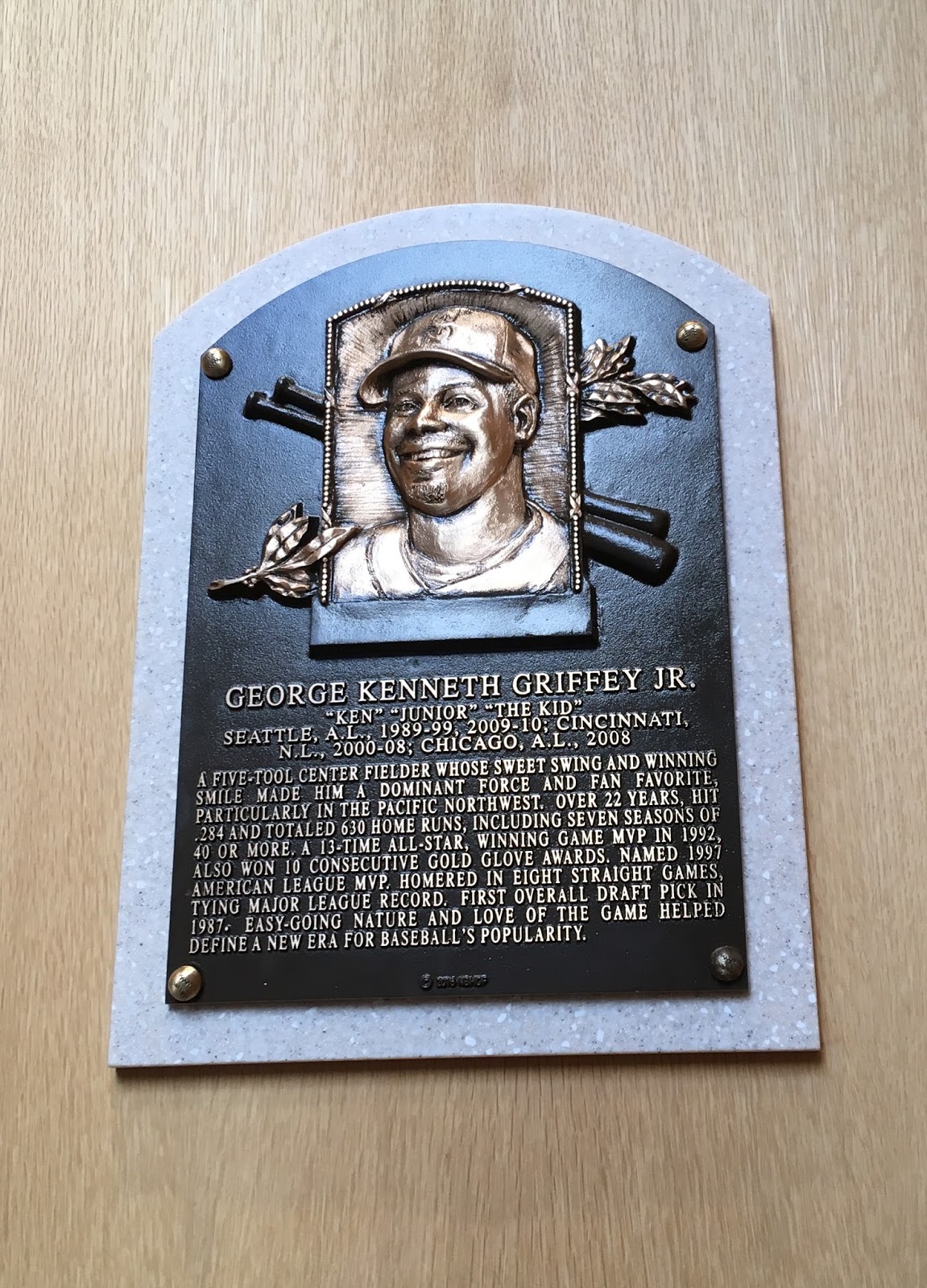
I finally made it to Cooperstown and the National Baseball Hall of Fame last fall, a few weeks after the 2017 regular season wound down. It was a bucket-list trip for me, and I spent two days wandering its galleries and took hundreds of photos. (See more here, if you'd like.) Here are two I'd like to post today: a picture of the gorgeous spiritual home of baseball, Doubleday Field, and the hand-written lyrics of baseball's most famous song.
No matter what you anticipate in this season of resurrection and possibility, may you always experience joy in the journey.
Easter is a decision to live with hope -- fully, recklessly, courageously -- even in the face of death and despair itself. --The Rev. Scott Alexander
Today's #UULent word is anticipation. I grew up Lutheran, so it seems to me this would be a better word for tomorrow, the day before Easter. As a kid hearing the story of Jesus dying on the cross on what came to be called Good Friday, I sometimes wondered what was so good about it. Then again, we knew that the story had a happy ending on the way.
We can't always know that in real life, and the fact that Easter 2018 falls on April 1 gives the whole idea of happy endings a sardonic edge. But for decades now, I've thought of Easter as more of a verb--an idea introduced to me about 20 years ago in a wonderful sermon by the Rev. Scott Alexander. To Easter means to live in hope, particularly in troubled times.
And here I'd like to say a few words about baseball. The 2018 Major League Baseball season began yesterday, ushering in a six-month, 162-game odyssey that tests the hopes of its players and fans like no other sport. Baseball's Opening Day always brings huge anticipation that this year might be different (or the same, if you're the Houston Astros). But as I've written before, although a World Series ring is always the goal, a more realistic hope is to win more games than you lose--and have a good time along the way.I finally made it to Cooperstown and the National Baseball Hall of Fame last fall, a few weeks after the 2017 regular season wound down. It was a bucket-list trip for me, and I spent two days wandering its galleries and took hundreds of photos. (See more here, if you'd like.) Here are two I'd like to post today: a picture of the gorgeous spiritual home of baseball, Doubleday Field, and the hand-written lyrics of baseball's most famous song.
No matter what you anticipate in this season of resurrection and possibility, may you always experience joy in the journey.
Tuesday, March 27, 2018
Many, many thanks
Sixth in a series for #UULent2018.
Today's UULent word is gratitude. As I've noted a few times, I'm taking part in UU Wellspring--Spiritual Practices at my church. As befits our spacious Unitarian Universalist faith, we are encouraged to try any number of practices to see which ones work best in our lives. Back in January, we were encouraged to begin a gratitude journal: basically, to take time every night before bed to write down five things for which we were grateful that day.
I've fitfully kept gratitude journals before, as far back as 2005. This time, though, I've done it faithfully nearly every day since starting January 3. Two weeks after I started, I wrote, "This was a good exercise. It helped me recognize how grateful I am for my life as it is right now and that little things mean the most."
I like the idea of going to sleep with a grateful heart, but I've found that it's easier for me to write my gratitudes as part of the quiet mornings I enjoy most days: often before I read a while, sometimes after. Either way, it helps set the stage for a grateful day.
Today's UULent word is gratitude. As I've noted a few times, I'm taking part in UU Wellspring--Spiritual Practices at my church. As befits our spacious Unitarian Universalist faith, we are encouraged to try any number of practices to see which ones work best in our lives. Back in January, we were encouraged to begin a gratitude journal: basically, to take time every night before bed to write down five things for which we were grateful that day.
I've fitfully kept gratitude journals before, as far back as 2005. This time, though, I've done it faithfully nearly every day since starting January 3. Two weeks after I started, I wrote, "This was a good exercise. It helped me recognize how grateful I am for my life as it is right now and that little things mean the most."
I like the idea of going to sleep with a grateful heart, but I've found that it's easier for me to write my gratitudes as part of the quiet mornings I enjoy most days: often before I read a while, sometimes after. Either way, it helps set the stage for a grateful day.
| Gratitude journals past and present |
Friday, March 23, 2018
The waiting is the hardest part
Fifth in a series for #UULent2018.
Today's UU Lent word is patience. Lord, it's a long, long road.
I had the privilege of seeing Tom Petty perform live twice: once back in the 1980s with Bob Dylan and again last summer at Safeco Field. None of us there for his concert last August knew that he had fewer than 10 shows remaining and that he'd be gone six weeks later. It was all about the moment and the power of music. I'm sure it was the same five weeks later for the people who saw his very last show at the Hollywood Bowl.
Petty's death, especially coming hours after the heartbreaking day in Las Vegas, was a wake-up call for many of us. That's a cliche, but it's true. Stop waiting. Start living.
I've been doing a lot of waiting lately. The client that gave me the largest amount of editing work last year won't need any freelance help for a bit (and even that's not guaranteed). Meanwhile, I've been sending out article queries and essays and letters of interest. It usually feels like these are going into a void and, given the amount of email most of us get these days, I rarely expect a reply.
I have exactly one assignment at the moment, and it's not going well. I need to interview a handful of people in their 50s or 60s who've moved to Edmonds, Washington, from beyond the Seattle area, and I've sent several dozen inquiries to people who might know of such folks. So far, I have found none. Fortunately, I still have about a month until my deadline, so I'll start walking the streets of Edmonds soon in hopes of randomly finding my people. It's not a big place, and wandering its charming downtown is a fine way to spend time, so this isn't exactly a problem--and my inquiries elsewhere may yet bear fruit. Still ... it's more waiting. (And if you or someone you know recently relocated to Edmonds from outside the Seattle area, please raise your hand.)
So my writing and editing work is a big ball of waiting right now. But many other things are just fine. Baseball starts soon, and I'll be back for a third season as an usher at the ballpark. I've had more time to meditate, read books, run errands, do spring cleaning, help my partner, and take long walks. I also have more time to do my favorite thing in the world, and that's travel. My sweetheart and I have a train trip planned soon, and I'll be going to the wild edge of Scotland a month after that, volunteering to get garden beds ready for spring and taking inexpensive room and board in trade for my efforts.
I left full-time work again just over two years ago because I value time more than money. It's a hard way to live at times, and patience has never been my strongest virtue. I get better at it all the time, though, and I'll keep practicing--and living like there may be no tomorrow, or thousands of tomorrows.
Today's UU Lent word is patience. Lord, it's a long, long road.
I had the privilege of seeing Tom Petty perform live twice: once back in the 1980s with Bob Dylan and again last summer at Safeco Field. None of us there for his concert last August knew that he had fewer than 10 shows remaining and that he'd be gone six weeks later. It was all about the moment and the power of music. I'm sure it was the same five weeks later for the people who saw his very last show at the Hollywood Bowl.
Petty's death, especially coming hours after the heartbreaking day in Las Vegas, was a wake-up call for many of us. That's a cliche, but it's true. Stop waiting. Start living.
I've been doing a lot of waiting lately. The client that gave me the largest amount of editing work last year won't need any freelance help for a bit (and even that's not guaranteed). Meanwhile, I've been sending out article queries and essays and letters of interest. It usually feels like these are going into a void and, given the amount of email most of us get these days, I rarely expect a reply.
I have exactly one assignment at the moment, and it's not going well. I need to interview a handful of people in their 50s or 60s who've moved to Edmonds, Washington, from beyond the Seattle area, and I've sent several dozen inquiries to people who might know of such folks. So far, I have found none. Fortunately, I still have about a month until my deadline, so I'll start walking the streets of Edmonds soon in hopes of randomly finding my people. It's not a big place, and wandering its charming downtown is a fine way to spend time, so this isn't exactly a problem--and my inquiries elsewhere may yet bear fruit. Still ... it's more waiting. (And if you or someone you know recently relocated to Edmonds from outside the Seattle area, please raise your hand.)
So my writing and editing work is a big ball of waiting right now. But many other things are just fine. Baseball starts soon, and I'll be back for a third season as an usher at the ballpark. I've had more time to meditate, read books, run errands, do spring cleaning, help my partner, and take long walks. I also have more time to do my favorite thing in the world, and that's travel. My sweetheart and I have a train trip planned soon, and I'll be going to the wild edge of Scotland a month after that, volunteering to get garden beds ready for spring and taking inexpensive room and board in trade for my efforts.
I left full-time work again just over two years ago because I value time more than money. It's a hard way to live at times, and patience has never been my strongest virtue. I get better at it all the time, though, and I'll keep practicing--and living like there may be no tomorrow, or thousands of tomorrows.
Tuesday, March 20, 2018
I want to be in the room where it happens
Fourth in a series for #UULent2018
We’re living in a time when it’s possible to experience anything from a concert to a face-to-face conversation with friends in real time online, no matter where we are.
It’s amazing, but it’s still not the same as being there in person, without a screen as intermediary. Of course, I am writing this on my phone while sitting on the bus. But I’ve been blessed to have a few indelible in-person experiences in the past few weeks.
I traveled to Twin Falls, Idaho, earlier this month for the 25th anniversary party of the Unitarian Universalist fellowship I helped start there in 1993. It was a joy to see people I hadn’t seen in years—both from the Magic Valley UU Fellowship and from the Boise UU Fellowship, which brought its choir and other congregants along to help celebrate.
Earlier that day, I was able to check in on a friend I hadn’t seen in a long time. She was diagnosed several years ago with cognitive decline, so I wondered whether she’d remember me. She did, and we had a lovely visit—one we couldn't have enjoyed on the phone. It’s true her short-term memory is gone; she asked me the same questions over and over, as I expected she would. But she has sweet memories from decades gone by, and she is able to appreciate a favorite painting as much as she ever could. And interestingly, she told me how much less stressed I seem these days than when I was younger and always in a hurry. Hmmmm ...
Later that same wonderful week, I finally saw Hamilton onstage at Seattle’s Paramount Theater. It was all I’d hoped it would be; I still have earworms 10 days later. For weeks before the show, I'd been enjoying the original cast recording, but hearing and seeing this landmark musical in person was one of the best entertainment experiences of my life—made all the sweeter because I was able to share it with people I love.
Technology is a fine way to reach out to people and to experience the world. But being physically present—at least some of the time—is priceless.
We’re living in a time when it’s possible to experience anything from a concert to a face-to-face conversation with friends in real time online, no matter where we are.
It’s amazing, but it’s still not the same as being there in person, without a screen as intermediary. Of course, I am writing this on my phone while sitting on the bus. But I’ve been blessed to have a few indelible in-person experiences in the past few weeks.
I traveled to Twin Falls, Idaho, earlier this month for the 25th anniversary party of the Unitarian Universalist fellowship I helped start there in 1993. It was a joy to see people I hadn’t seen in years—both from the Magic Valley UU Fellowship and from the Boise UU Fellowship, which brought its choir and other congregants along to help celebrate.
Earlier that day, I was able to check in on a friend I hadn’t seen in a long time. She was diagnosed several years ago with cognitive decline, so I wondered whether she’d remember me. She did, and we had a lovely visit—one we couldn't have enjoyed on the phone. It’s true her short-term memory is gone; she asked me the same questions over and over, as I expected she would. But she has sweet memories from decades gone by, and she is able to appreciate a favorite painting as much as she ever could. And interestingly, she told me how much less stressed I seem these days than when I was younger and always in a hurry. Hmmmm ...Technology is a fine way to reach out to people and to experience the world. But being physically present—at least some of the time—is priceless.
Thursday, March 8, 2018
More will be revealed
Third in a series for #UULent2018.
Sometimes in life, we choose things without really knowing why, trusting that we'll figure it out as we go along. Such was the case for me when I signed up for another year of UU Wellspring--a program for spiritual deepening--late last summer.
The first time I applied to be in Wellspring, for the 2015-2016 session, I was extremely intentional about it. I'd heard great things about the program from past participants, and I went into it feeling it might be useful as a discernment tool. Wellspring was helpful as I addressed the question of whether to stay in a job I liked but did not love, and it wound up being valuable in many other ways.
Still, when I got an email last spring asking whether I wanted to sign up for a year of further inquiry into spiritual practices, I demurred. I didn't think I'd have time enough to focus on what Wellspring ideally requires (a friend likens it to "graduate school for the soul," albeit without tests and student loans), and I was thinking about taking part as a mentor in my congregation's Coming of Age program. But another call for Wellspring went out late last summer. They needed a few more people to sign up if it was to proceed. I decided to go for it, and I'm glad I did.
Two-thirds into this year's program, Wellspring continues to give me a widening and deepening palette of spiritual tools. My final project for the 2015-2016 year was a collage featuring a "palette of practice," on which I included the many components I use on my eclectic spiritual path. (You can see it at the bottom of this blog's home page.) They include gratitude, nature, partnership, music, community, walking, meditation, attention, hospitality, and discernment.
Those are all still in play for me, but it's interesting to watch how they wax and wane. For example, two months ago, our Wellspring assignment was to begin a gratitude journal--something I've done occasionally over the years, but never faithfully. For whatever reason, I'm able to do it more regularly now, and I'm getting a lot out of it. If I had to redo my palette now, I think I'd add one practice that doesn't seem to fit in with those I drew two years ago, and I'd call it "possibility"--as in, being open to possibility. In fact, I'd probably rename my work a "palette of practice and possibility."
In addition to our twice-monthly sessions and in-between homework of various kinds, Wellspring participants are asked to meet at least monthly with a spiritual mentor. At each session, my mentor asks whether I want to choose a little angel heart stone from a basket she has nearby. Most have words on the back, but the one I chose last week had no words: just the angel, arms outstretched, with a spark for the heart. It's the stone of unlimited possibilities, my mentor said.
Possibility is something I've written about before and something I sense stirring for me again. As a writer and editor, I must constantly think about where to place my professional energy and whether or not I'll earn money in the exchange. (That's not something the average mechanic or doctor or plumber needs to consider when plying their skills.) At times, this makes me resentful when I choose to write for no pay (as I do here on this blog, for example), or for less than I ought to earn. I also know that as someone who has freelanced most of my adult life and as someone of modest means, I'll need to use these main skills of mine for many years to come, for love or for money, ideally for both.
It's here that the sense of possibility keeps me going--that, and the flexibility I have as a self-employed person. Hearkening ahead to another word coming up on the UU Lent calendar, I find myself more curious than I've been in a while about where my writing may take me, and I feel open to possibilities I have not considered.
Learn more about UU Wellspring here. And if you'd like to support my work, consider buying a copy of Surely Joy (the book!) or even hiring me as a writer or editor for your project. You can learn more and reach me via LinkedIn.
Sometimes in life, we choose things without really knowing why, trusting that we'll figure it out as we go along. Such was the case for me when I signed up for another year of UU Wellspring--a program for spiritual deepening--late last summer.
The first time I applied to be in Wellspring, for the 2015-2016 session, I was extremely intentional about it. I'd heard great things about the program from past participants, and I went into it feeling it might be useful as a discernment tool. Wellspring was helpful as I addressed the question of whether to stay in a job I liked but did not love, and it wound up being valuable in many other ways.
Still, when I got an email last spring asking whether I wanted to sign up for a year of further inquiry into spiritual practices, I demurred. I didn't think I'd have time enough to focus on what Wellspring ideally requires (a friend likens it to "graduate school for the soul," albeit without tests and student loans), and I was thinking about taking part as a mentor in my congregation's Coming of Age program. But another call for Wellspring went out late last summer. They needed a few more people to sign up if it was to proceed. I decided to go for it, and I'm glad I did.
Two-thirds into this year's program, Wellspring continues to give me a widening and deepening palette of spiritual tools. My final project for the 2015-2016 year was a collage featuring a "palette of practice," on which I included the many components I use on my eclectic spiritual path. (You can see it at the bottom of this blog's home page.) They include gratitude, nature, partnership, music, community, walking, meditation, attention, hospitality, and discernment.
Those are all still in play for me, but it's interesting to watch how they wax and wane. For example, two months ago, our Wellspring assignment was to begin a gratitude journal--something I've done occasionally over the years, but never faithfully. For whatever reason, I'm able to do it more regularly now, and I'm getting a lot out of it. If I had to redo my palette now, I think I'd add one practice that doesn't seem to fit in with those I drew two years ago, and I'd call it "possibility"--as in, being open to possibility. In fact, I'd probably rename my work a "palette of practice and possibility."
In addition to our twice-monthly sessions and in-between homework of various kinds, Wellspring participants are asked to meet at least monthly with a spiritual mentor. At each session, my mentor asks whether I want to choose a little angel heart stone from a basket she has nearby. Most have words on the back, but the one I chose last week had no words: just the angel, arms outstretched, with a spark for the heart. It's the stone of unlimited possibilities, my mentor said.
Possibility is something I've written about before and something I sense stirring for me again. As a writer and editor, I must constantly think about where to place my professional energy and whether or not I'll earn money in the exchange. (That's not something the average mechanic or doctor or plumber needs to consider when plying their skills.) At times, this makes me resentful when I choose to write for no pay (as I do here on this blog, for example), or for less than I ought to earn. I also know that as someone who has freelanced most of my adult life and as someone of modest means, I'll need to use these main skills of mine for many years to come, for love or for money, ideally for both.
It's here that the sense of possibility keeps me going--that, and the flexibility I have as a self-employed person. Hearkening ahead to another word coming up on the UU Lent calendar, I find myself more curious than I've been in a while about where my writing may take me, and I feel open to possibilities I have not considered.
Learn more about UU Wellspring here. And if you'd like to support my work, consider buying a copy of Surely Joy (the book!) or even hiring me as a writer or editor for your project. You can learn more and reach me via LinkedIn.
Subscribe to:
Posts (Atom)


